Product Knowledge
Hot Stamping Foil for Uncoated Gray Board
A 22 micron, 670 mm, 2000 m, standard-core request for uncoated, gray-back and micro-flute board: what our record covers, and the four points to confirm.
QUICK ANSWER
None of the four items in this specification matches our recorded standard as written, and that is the first thing to be clear about. Our recorded roll formats are 0.64 m x 120 m and 1.28 m x 240 m on a 12 micron carrier; a 22 micron figure, a 670 mm width, a 2000 m length and the core are therefore all custom-specification questions rather than catalog items. Our application table does allow specific specifications and colors to be customized for large quantities, so the route exists - but all four are confirmed at quotation, not read off a catalog. On the substrate side, our paper grade is recorded for paper cartons at 90-120 C; that is the nearest recorded starting point for a carton pulled from uncoated stock, not a recorded uncoated match. Uncoated board changes the job in ways a coated sheet does not: the adhesive meets fiber and wicks into it, loose fiber can travel to the die, roughness and the risk of crushing micro-flute both pull against the pressure a rough sheet needs, and a metallic finish follows the texture instead of levelling it. Gold tones, silver and rose gold are shades matched to a sample, not grades.
01 WHAT AN UNCOATED SHEET DOES DIFFERENTLY
An uncoated sheet has no film-forming coating, so the adhesive meets fibers and whatever binder the mill applied. That changes four things, and all four show up on press.
Absorbency. The adhesive can wick into the sheet, so part of the bond is mechanical rather than a film sitting on a surface. Too little heat can leave the adhesive unable to wet the fiber; too much can let it penetrate so far that too little is left at the interface. The reference window is the same 90-120 C that our paper grade is recorded at, but inside it the usable band on an uncoated sheet is narrower than on a coated one, which is why the trial matters more here than on coated board.
Loose surface fiber. Fiber can transfer to the die and into the foil during a run. A common symptom is dots going missing part-way through the run and getting worse rather than failing from the first sheet; check the die for fiber and adhesive buildup before assuming the board is the cause, because a dirty or worn die and a foil batch change produce the same pattern. The same fiber is why a tape test on uncoated board can pull fiber away, and that is substrate failure rather than foil failure - the bond exceeded the sheet's own cohesion.
Roughness. A rough sheet has peaks and valleys, so the die has to reach the valleys, and reaching them usually means more pressure or a more conformable backing - but a conformable backing also lets the die sink and can spread the mark, so the backing is a trade-off between valley transfer and fill-in. Our article on small letters filling in sets out that trade-off. But pressure on the peaks burnishes them. On a rough sheet those two requirements pull against each other, which makes small type on uncoated board the hardest case in this article - the marks most at risk of filling in sit on the surface that needs the most pressure to transfer at all, and over-pressure there does not only burnish the peaks, it compresses the sheet and spreads the foil.
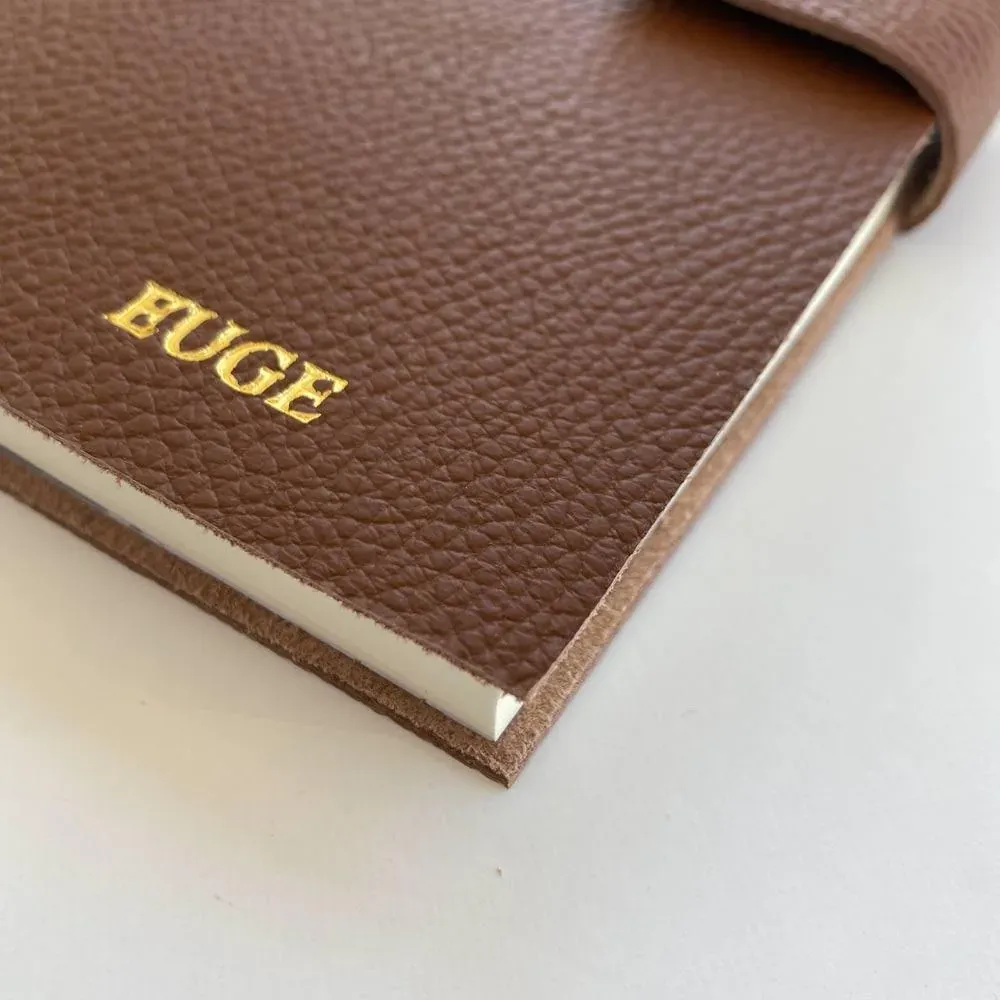
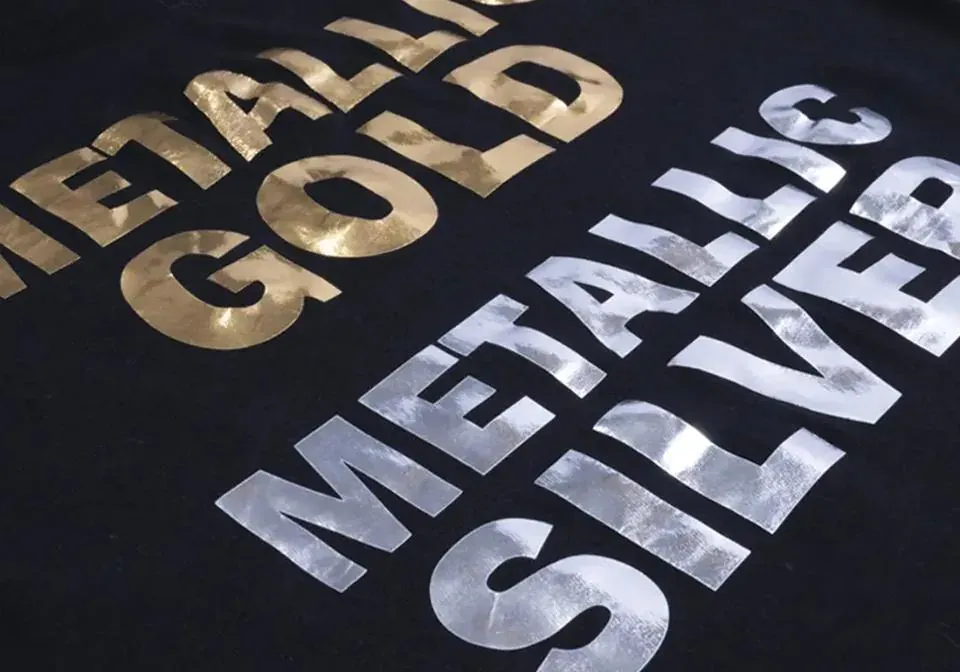
The finish reads differently. A foil on an uncoated sheet follows the texture rather than levelling it. Metallic reads deeper and less mirror-like than the same foil on a coated sheet, and silver picks up the substrate most directly. That is a property of the sheet, not a fault in the foil, and it is worth agreeing with the buyer before the sample is approved rather than after.
02 GRAY BACK, GRAY CORE, AND WHICH FACE YOU STAMP
Gray back and gray core both put recycled fiber into the sheet. Recycled fiber typically varies more than virgin fiber, both from batch to batch and across a single sheet, so a single sheet taken off the top of a pallet is not a trial. Ask for pieces from more than one position and, if you can, more than one pallet.
The useful discipline is to name the face rather than the construction. The gray layer is a back or a core; what matters for adhesion is the face you actually stamp, and its own surface treatment. A request that says only gray back or gray core leaves that open, and two boards with the same construction name can have different faces.
03 THE FLUTE CASE: MICRO-FLUTE AND HIGH GRAMMAGE
A flute is a series of arches under the outer liner. The die meets the liner over the crests first; over a valley the liner spans a void, so the support behind the sheet differs from point to point. Three consequences follow, and none of them is fixed by a different foil grade alone, because the dominant causes are in the board and the support.
First, the valleys need more travel for the same impression, so a setting that prints the crests cleanly leaves the valleys light. Second, the pressure needed to reach the valleys crushes the flute - visible as a flattened band and a soft spot on the reverse; compare the stamped area with an unstamped piece of the same board, because a soft spot can also be inbound crush or a board defect. Third, the support behind the sheet is a major factor: a flat platen over a crest and over a void gives two different impressions from one setting, and a conformable backing narrows that difference. Check die relief and platen flatness before increasing pressure.
Direction matters too. A mark running along a flute behaves differently from one crossing the flutes at an angle, because the number of crests under the mark changes. If a design has a fine element, check whether it runs along a flute or across one.
High grammage moves the balance rather than removing the problem. More caliper can mean more material to compress and more caliper variation across the sheet, and a stiffer sheet resists conforming to the die. A thicker liner can also distribute the load and delay local crush in some constructions, which can partly offset the flute problem. The two effects pull in opposite directions, so heavy uncoated board is not simply harder or easier than light board and the trial is what separates them.
What follows is trade knowledge and a trial case, not a recorded match: our application data does not name corrugated board, micro-flute, gray back, gray core or grammage at all. Paper cartons are recorded; a fluted structure is not. That does not mean it cannot be done - it means we will say so in the quotation rather than implying otherwise.
04 READING THE FOUR NUMBERS
Each part of the specification constrains something different, and none of them can be read as a constraint without a question.
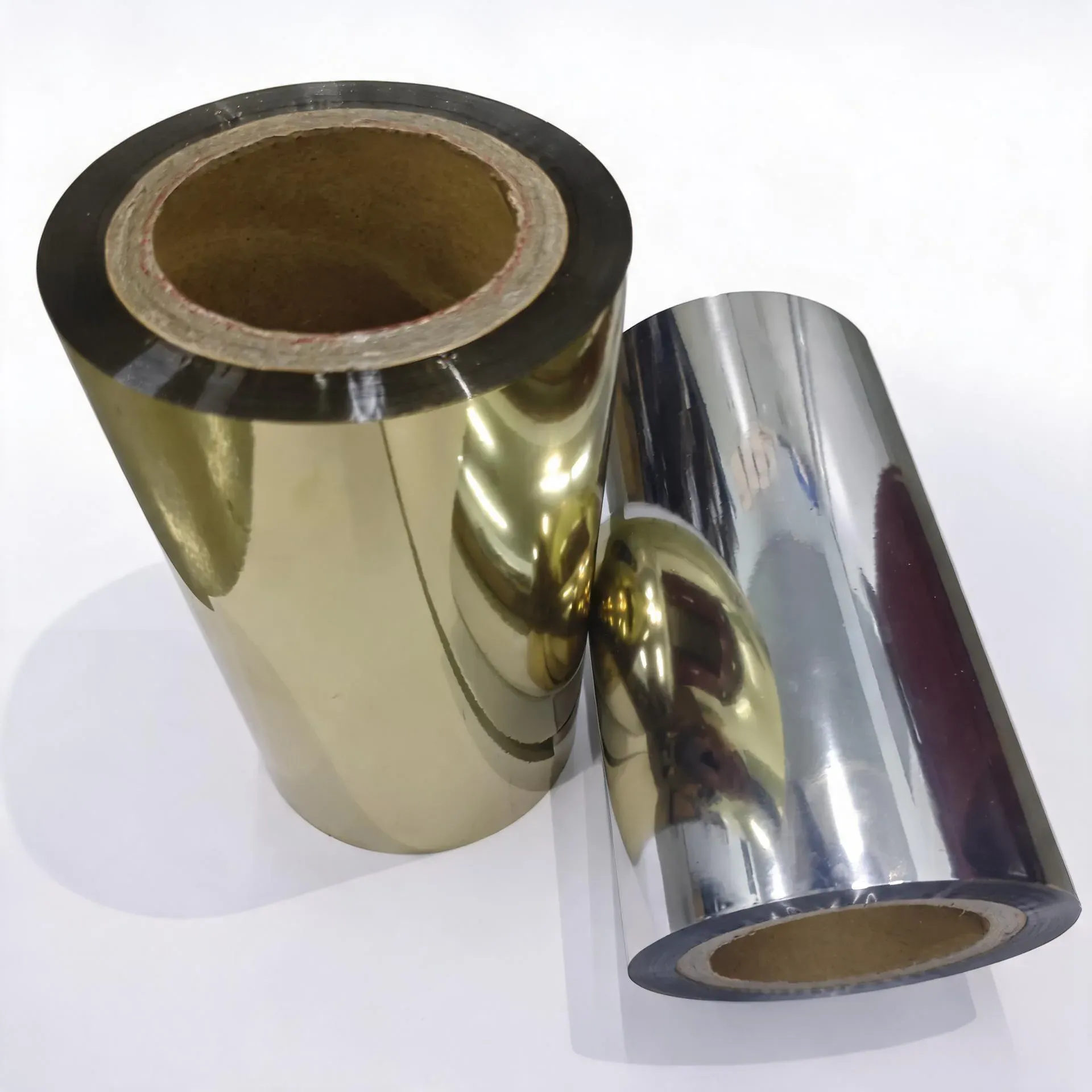
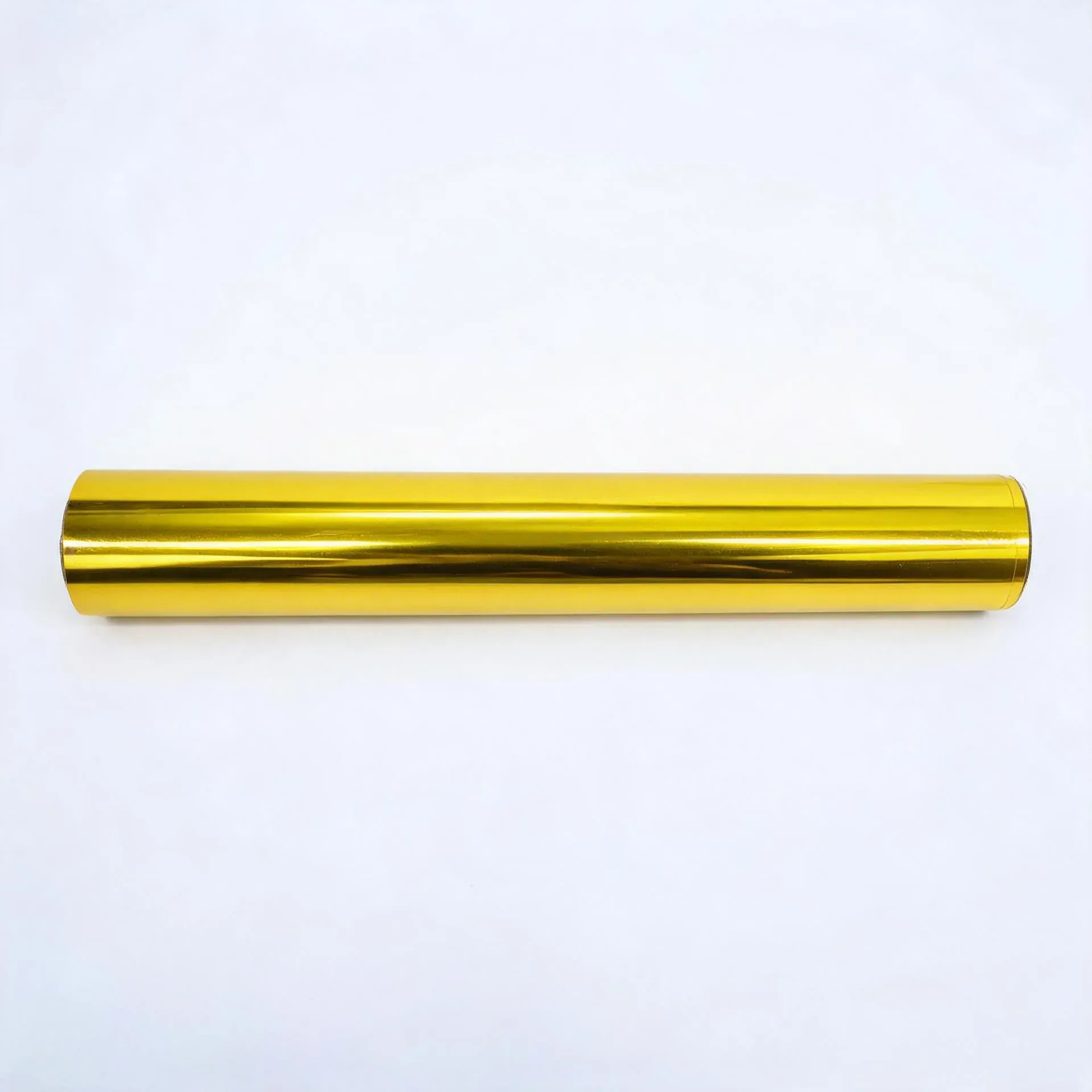
22 micron. The number could be the carrier gauge or the total foil thickness, and the two mean different things. Our record specifies a 12 micron carrier, so a 22 micron figure is either a heavier carrier than we record, or a total thickness that includes the carrier plus the release, color, metallized and adhesive layers. Ask which one it is before treating it as a constraint, because the two are not comparable.
670 mm. Our recorded widths are 640 mm and 1280 mm, so 670 mm is neither and is a custom slit. The arithmetic is worth putting on the table: one 1280 mm web can yield one 670 mm web and leave 610 mm, and that leftover has to be used somewhere or it is waste. A 640 mm web cannot yield 670 mm at all. So ask whether 670 mm is the finished web width, the widest the press accepts, or a tolerance - a requirement that is really up to 670 opens the 640 mm standard, and a hard 670 does not.
Standard core. Our application table records no core specification at all, so the core is part of the custom specification rather than a standard we hold; tell us the diameter in millimeters and the material you need and we will confirm both at quotation. The term also means different things to different buyers, so it is worth stating which you mean. On a 2000 m roll the core stops being a detail: it carries the roll's weight through handling and has to hold the web without collapsing.
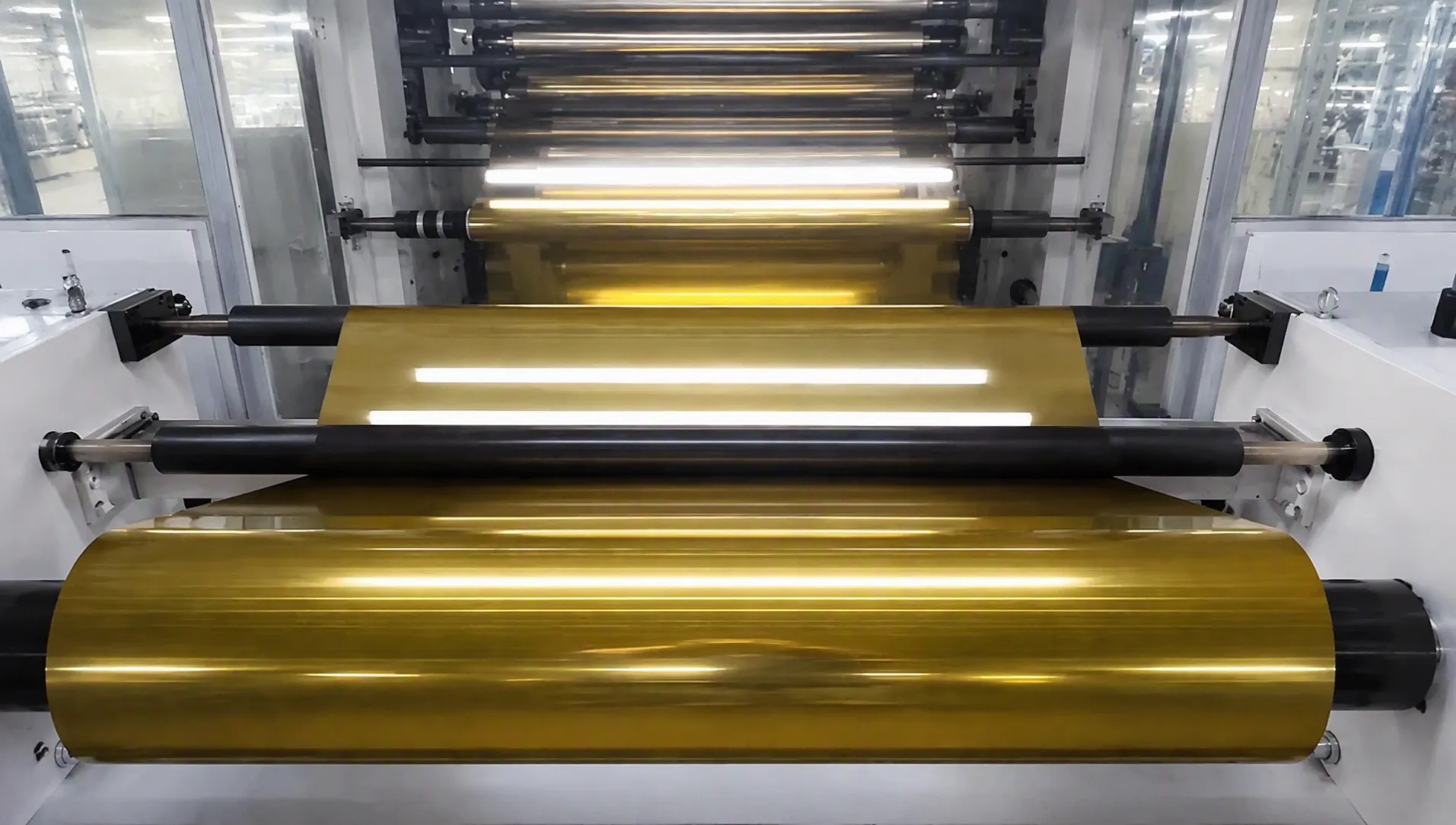
2000 m. Our recorded lengths are 120 m and 240 m, so 2000 m is roughly eight times the longer of the two and is a jumbo roll. The first question is whether it must be one continuous length or may contain splices. In decorative stamping a splice is a defect: the foil changes thickness at the joint, so the mark either misses or over-presses across it, and a spliced roll needs the splice flagged and planned around rather than discovered on press. The second question is the roll stand - a 2000 m roll needs a mandrel and a stand that take the weight and hold tension as the diameter falls.
Put together, all four of those are custom-specification territory, which is the route our application table's footnote describes: bulk use requires a trial first, and for large quantities specific specifications and colors can be customized. The four points are confirmed at quotation, not read off a catalog - and this page is not going to state them as capability we hold.
05 THE SHADE QUESTION ON A ROUGH SHEET
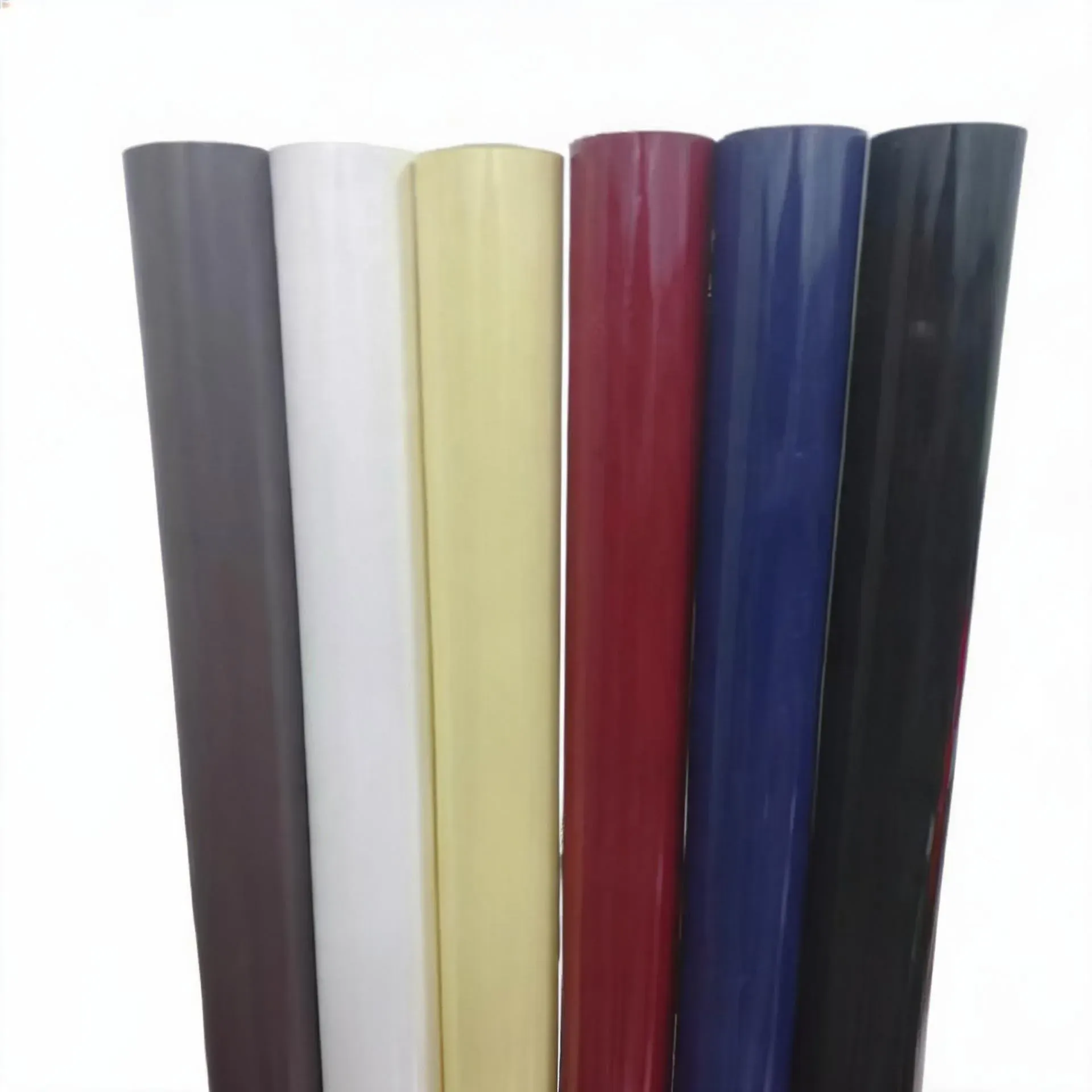
Gold tones, silver and rose gold are shades, not grades, and our data does not enumerate shades for any product line. A shade is matched to a reference you can hold: a physical sample, a color chip, or the foil on a job you already run.
The complication on this board is that shades converge. An uncoated or textured sheet scatters light, so a pale gold, a champagne and a rose gold can read close to one another at arm's length, and a rose gold on a warm-toned board can read as plain gold. Of the three families in the brief, silver is the most sensitive, because it reflects the substrate most directly - on a rough or warm-toned sheet it reads gray rather than bright.
Two questions settle most shade briefs. First, is the silver meant to be a bright mirror silver or a matte silver, because on this board the two look very different. Second, is there an existing foil on another product that the new one has to match, because a reference beats a description every time.
06 HOW TO RUN THE TRIAL ON THIS BOARD
Run the trial on the actual board from the actual production lot - or the printed run, if the board is printed - with the flute direction and the face it will have in production. A hand sheet and a production sheet of the same construction are not the same trial.
Then check four things. Adhesion, with the cross-cut method your customer specifies - ISO 2409:2020 or ASTM D3359-23 Method B - and read a fiber pull as substrate failure rather than a foil failure. The two use different grids and rating scales, so use the one the customer names rather than treating them as interchangeable. Scratch resistance with ISO 1518-1:2023, the constant-loading method. Crush on the reverse of a fluted sheet, at the impression that prints the face cleanly, checked against an unstamped piece of the same board. There is no quoted method for local crush in a stamped area: ISO 3035 and ISO 3037 measure board-level flat and edgewise crush, not the stamped impression. And the appearance, side by side against the approved reference on the same board, because a shade that reads right on a coated swatch can read wrong here.
The adhesion and scratch tests are industry methods for assessing a finished surface; the crush and appearance checks are visual and tactile comparisons. None of them is a certificate or a pass grade for any foil.
07 WHAT TO SEND, AND WHAT TO CONFIRM
Send a piece of the actual board from the production lot, naming the face you stamp, the flute direction if it is fluted, and the caliper. Add the pressure or impression and the backing you use, the die temperature and dwell you run, whether the mark is small enough to be a fill-in risk, and whether a print or varnish follows the stamp - because our post-stamp row is recorded for coated art paper, OPP-laminated paper, UV varnish, PVC and ABS in small and medium areas, and uncoated board is not on that list.
On the four numbers, confirm four things back to us: whether 22 micron is the carrier or the total thickness, whether 670 mm is a finished width, a maximum the press accepts, or a tolerance, the core diameter in millimeters, and whether the 2000 m may be spliced. Those four answers decide whether the requirement is a standard format, a custom slit, or a custom construction - and they are the four things we cannot infer from the specification as written.
Send the board and the shade reference, and answer the four questions about the roll. We can tell you whether a grade is recorded for the face you stamp; the gauge, the width, the core and the length are confirmed at quotation, and the board and the flute are confirmed in your trial.
08 NEXT STEP
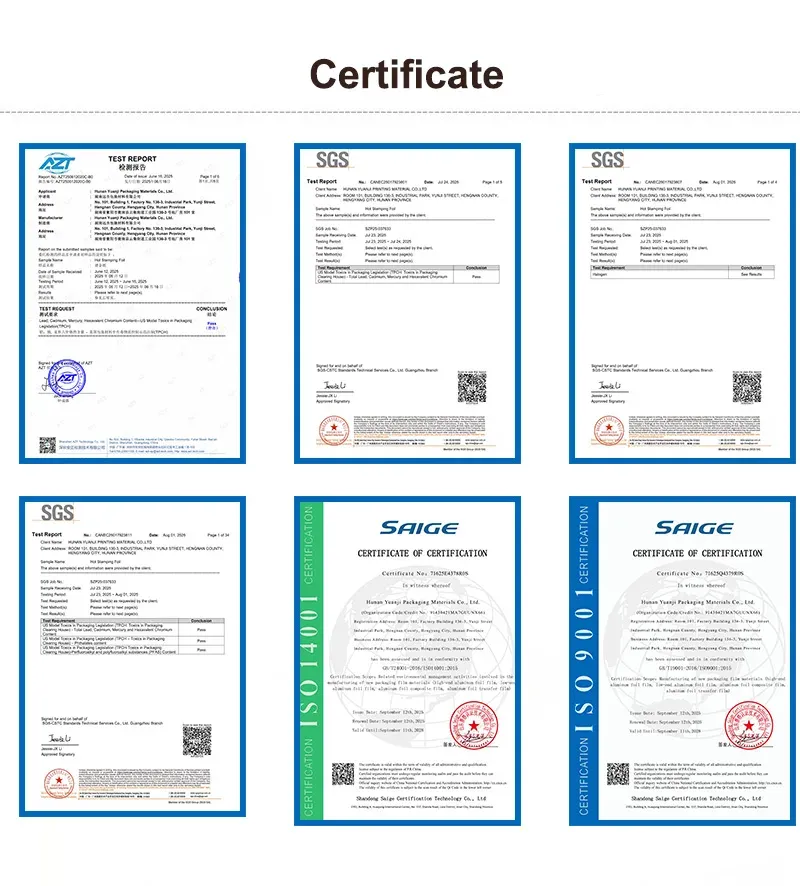
Tell us the face you stamp, the flute if there is one, and the roll as you need it. We will tell you which parts fall inside our recorded standard and which are custom, then send a sample for your trial. Yuanji Foil is a hot stamping and cold stamping foil manufacturer in Hengyang, Hunan, producing standard, coffee-tone, plastic, cold-stamping and hot-stamping, double-sided, pigment, low-halogen and transparent-dielectric foils, including holographic. We hold ISO 9001 and ISO 14001 management-system certificates and import and export rights.