Buying Guides
Which Hot Stamping Foil Is Suitable for PP Bottle Caps?
PP bottle caps need a foil grade made for polypropylene and tested on your actual caps — here is how to choose it, check adhesion, and approve a sample before you order.
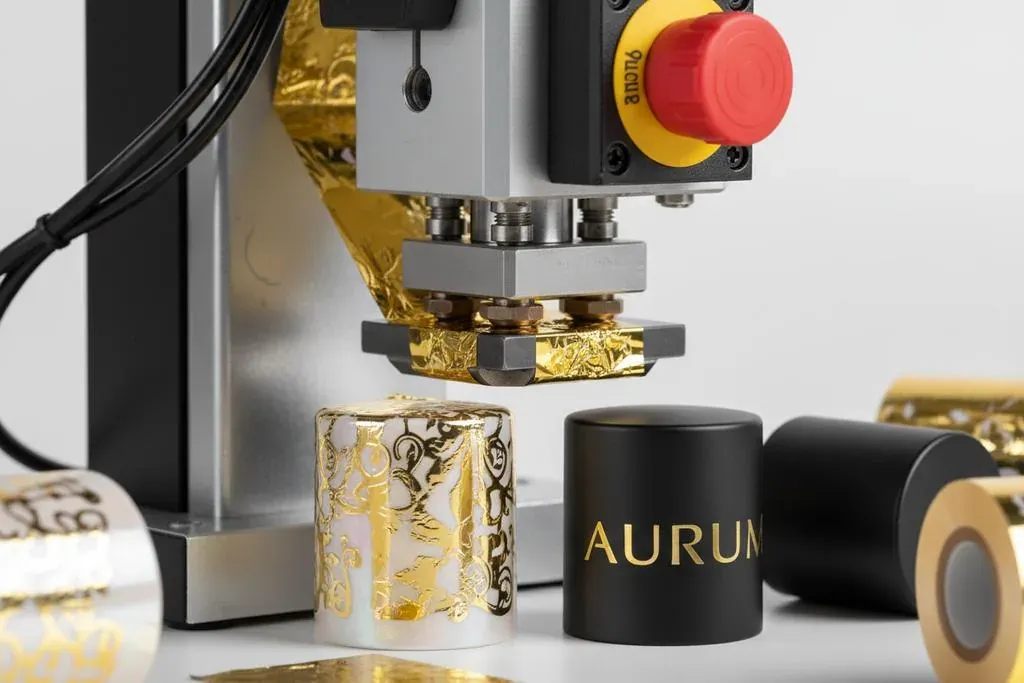
The short answer
There is no one foil that is "the PP foil". A cap is polypropylene, smooth, curved, and pressed into place — so the right foil is a grade made for plastic and molded parts, matched to your exact PP, and proven on your actual caps before you order.
Do not approve a foil because it worked on paper, on ABS, or on a flat PP sheet. A foil that works on ABS can behave differently on PP, and a foil that stamps cleanly on a flat sheet can peel on a finished cap. Send the factory your real caps, with your real artwork, and test the result the way the cap will actually be used.
- Why PP caps are harder than paper — and harder than ABS PP is the difficult case in this list for three reasons, and each one changes the foil you need. First, the surface. Polypropylene has low surface energy and a smooth, often slightly waxy finish, so foil adhesive has less to grip than it does on paperboard or coated board. That is why peeling is the usual failure on plastic, not faint stamping. Second, the shape. A cap is curved, and the stamped area is small. Fine text and thin lines sit on a curve, not on a flat sheet, so release, pressure and temperature have to be even across a surface that is not flat. Third, the use. A cap is pressed, twisted and handled every time the product is opened. A foil that looks perfect on a cap sitting on a bench can crack or lift after the cap has been pressed into place a few times. Test the finished cap, not only a flat sample. If a supplier quotes you a grade without asking what plastic your caps are, what colour they are, and whether the surface is plain or treated, they are guessing. A grade made for one plastic is not automatically right for PP.
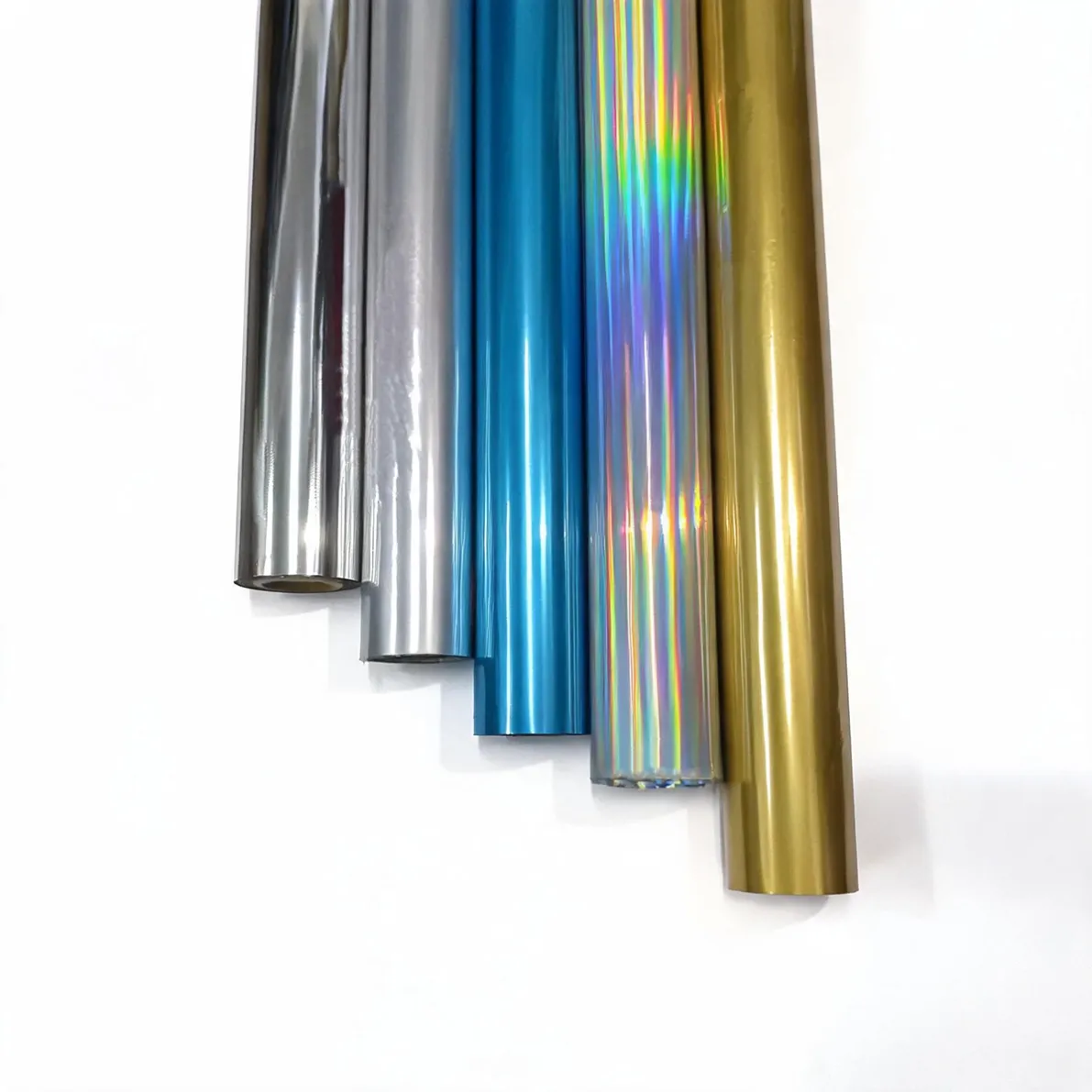
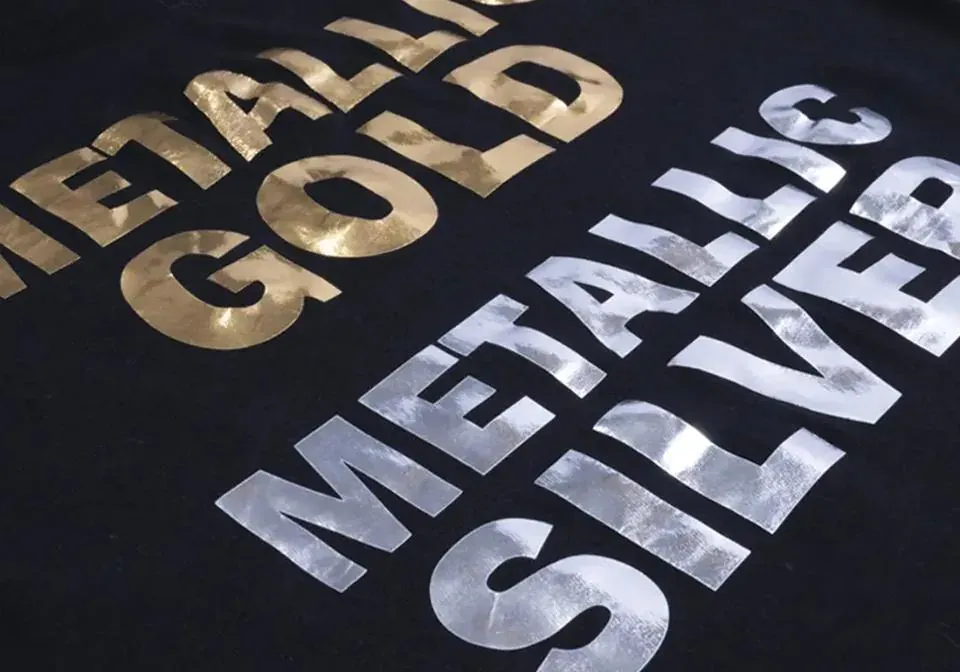
- What "suitable" means for a PP cap Ask for these four things, in that order, before you talk about price. A grade intended for plastic. Start from a grade made for plastic and molded parts — on our site, multi-color pigment foil is listed for molded parts, among other uses — and ask the factory to confirm, for your exact PP, whether that grade is the one to test. Do not take "it works on plastic" as an answer for PP caps. Plastic covers ABS, PP, PET and more, and they do not behave the same. A release that suits fine detail on a curve. Caps usually carry small text — a brand name, a size, a batch mark. The foil has to release cleanly on small letters at your stamping temperature, without filling in or bridging. That is a release question, not only a temperature question. An adhesive layer that holds on PP. This is the part you cannot judge from a swatch book. It is proven only by a tape test and a rub test on your caps, after the foil has cooled and again after 24 hours. A finish that survives handling. Gold is the usual choice for caps, but the effect you want — bright gold, matte pigment, holographic — changes the grade. Say which effect you need, and test that effect, not a different one. A grade that passes in gold may not pass in a dark pigment colour on the same cap.
- What to send for a sample test Send the factory the same caps you will run in production, not a close substitute. Include:
- your actual caps — the same PP grade, the same colour, the same surface finish, with any treatment already applied;
- your artwork, especially the smallest text and finest lines;
- your machine type and speed, and whether you stamp flat or on a curved surface;
- the effect you need — gold, pigment colour, or holographic — and the widths and quantities you expect to order. Ask the factory to stamp your caps and send the stamped caps back, or to send you foil to test on your own machine. A supplier who asks for those details is testing the foil for your job. One who quotes a grade from a swatch book is not. Find the temperature window by testing, not by copying a number from another job. Temperature varies with substrate and stamping area — for example, in our range coffee-tone foil is listed at 90–140°C and standard gold at 90–120°C — and your PP cap will have its own window. Start low, raise the temperature in small steps, and record where the result first becomes clean and where it starts to fail. Record pressure and dwell time at each step, and test at production speed: a foil that passes at a slow test speed can fail when dwell time drops.
- The tests that matter for a cap Use the same pre-order checks as for any new foil, but run them on the finished cap. Our pre-order testing checklist covers the six checks that matter most: real substrate, temperature window, fine detail, tape adhesion, rub/scratch/alcohol resistance, and a short production trial. For PP caps, pay attention to these in particular:
- Tape adhesion, right after stamping and again after 24 hours. Press tape firmly on the stamped area, pull it off at a steady angle, and look for foil lifting. Some adhesion problems only show up after the adhesive has fully set.
- Rub and scratch resistance. Rub the stamped area with a dry cloth, then a slightly damp cloth, for a fixed number of strokes. Check for dulling, loss of shine, or foil coming off. For caps, also check scratch resistance with a fingernail or a soft tool.
- Alcohol resistance, if the product may meet alcohol-based cleaners. Wipe once with alcohol on a cotton swab and check again.
- Press and twist. Press the cap into place and twist it open and closed the way a customer will, several times, then check the stamped area. This is the test a flat sheet cannot give you.
- Fine detail on the curve. Check your smallest text under good light and with a loupe if you have one. If small text is readable and edges are sharp at your chosen setting, you are in the window.
- A short production trial. Run a trial at your normal speed, check the first, middle and last caps, and look at waste: missed areas, double images, foil bridging, and edge build-up. A single good stamp is not an approval. Write down how many strokes the foil survived and what changed, so the next batch can be checked the same way. Do not accept "it looks fine" as a result.
- Get the grade and the terms in writing Before you order, get these in writing for your specific caps, grade and width:
- which grade is approved, and that it was tested on your PP caps, not on a generic plastic sample,
- minimum order quantity per colour and grade (as a guide at Yuanji: 100 rolls for standard specs, 100 rolls for dark colours, and standard gold/silver sometimes 50 rolls or more by agreement — confirm the figure for your exact order),
- price, and what it includes,
- lead time from order to shipment,
- and how samples are charged, if at all. Keep one approved, dated sample cap from your first order. Compare every later delivery against it. If a later batch stamps differently, that sample is your evidence — and a real factory will want to see it, because it tells them what changed. Ask how the factory keeps batches consistent: the same grade, the same release, the same colour from order to order. Do not accept a foil quoted for a different plastic, a different cap, or a different width. If a seller will not put the terms for your exact order in writing, do not order.
What to send for a PP cap quote
Send the factory:
- your caps, including the PP grade, colour and surface finish,
- the effect you need — gold, pigment colour, or holographic,
- your artwork, with the smallest text included,
- the widths, and the quantities you expect to order,
- your machine type and speed,
- and whether this is a first order or a repeat.
Get your PP caps tested before you order
Send us your caps, artwork, widths and expected quantities, and we will recommend a grade, check it on your caps, and test it before you order. Use the inquiry form on our Contact page, email kevin@yuanjifoil.com, or WhatsApp +86 199 1896 1505. Our working hours are Monday to Friday, 9:00–21:00 (GMT+8).