Product Knowledge
Hot Stamping Foil Packaging Rules by Market
Which rules reach a foil pack by market: food, wine, tobacco, waste and labeling limits by country.

QUICK ANSWER
On a printed carton the foil is usually not the layer the food-contact law regulates: the board underneath is. The pack itself is packaging for the waste rules, and a tobacco or alcohol pack carries its own labeling rules on top. So answer three questions in order - does the foil touch food, what is the pack made of, is it a tobacco or alcohol pack. The first selects the food-contact rules, the second the material standard, the third the category rules. Start with the first: it decides whether a migration limit applies at all.
01 THREE QUESTIONS THAT DECIDE WHICH LAW APPLIES
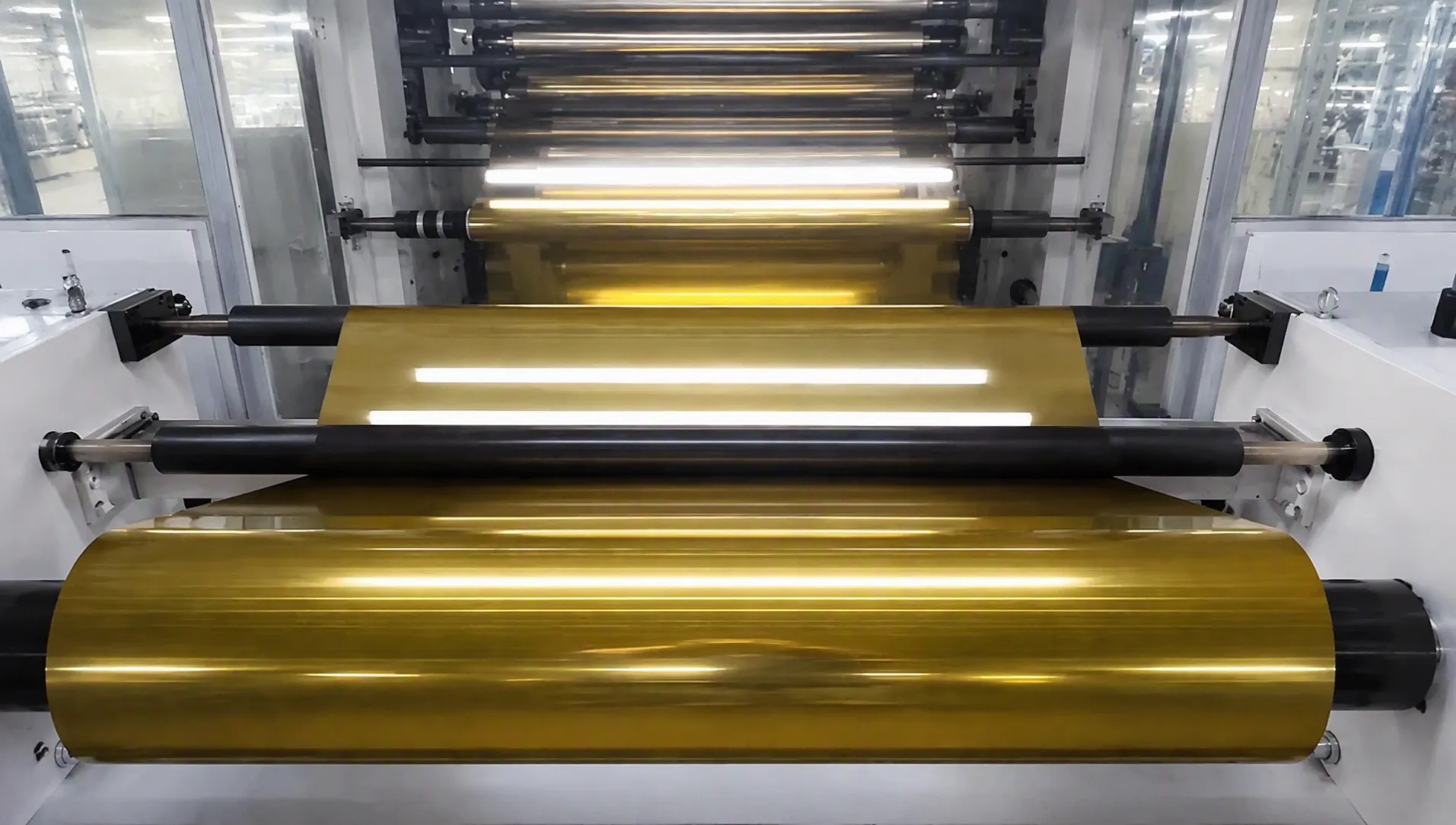
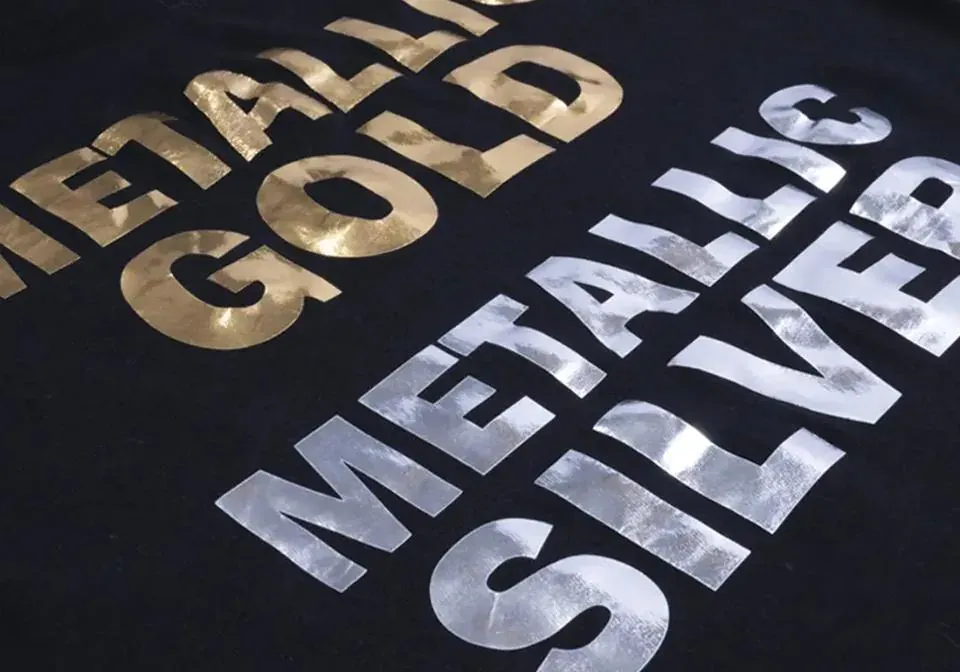
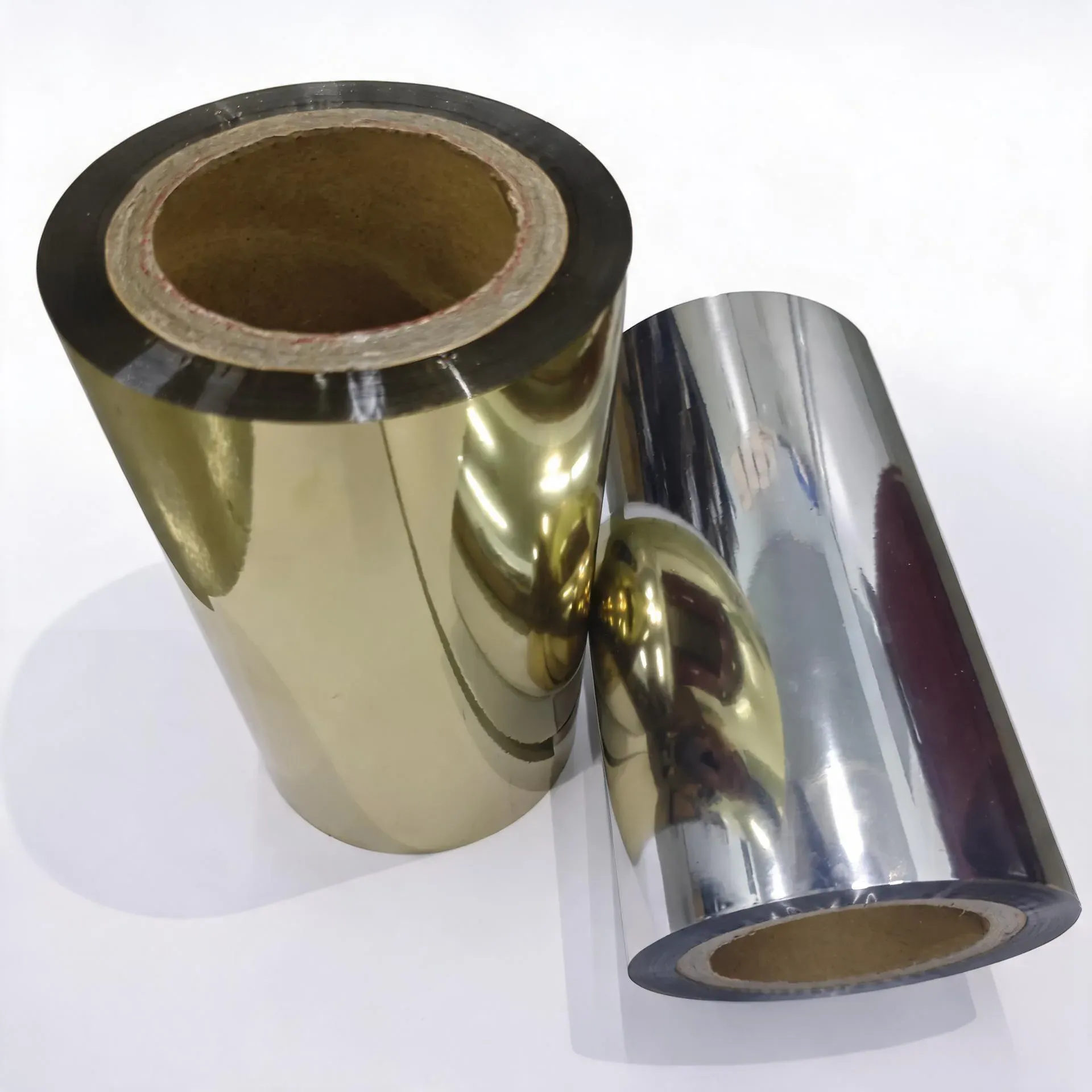
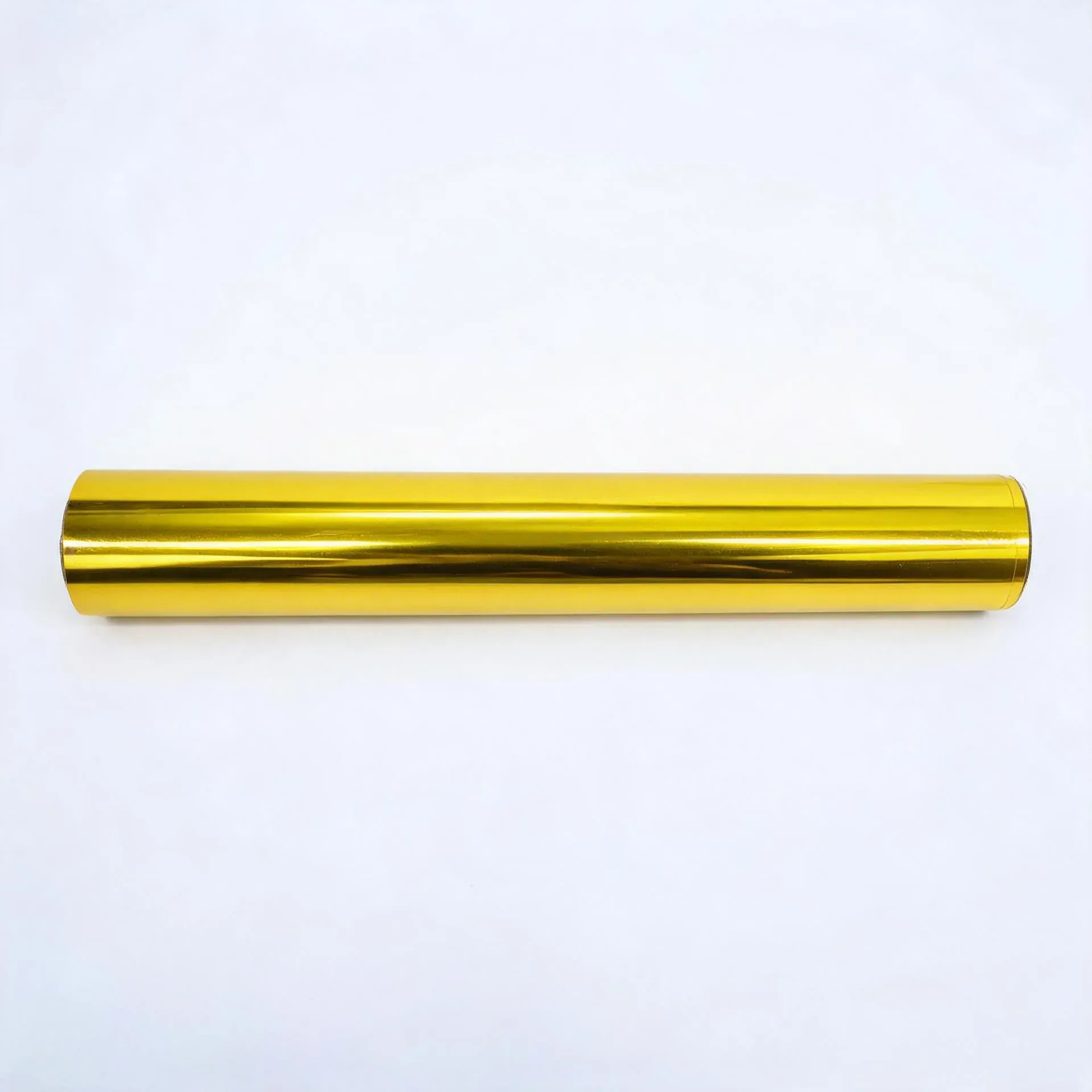
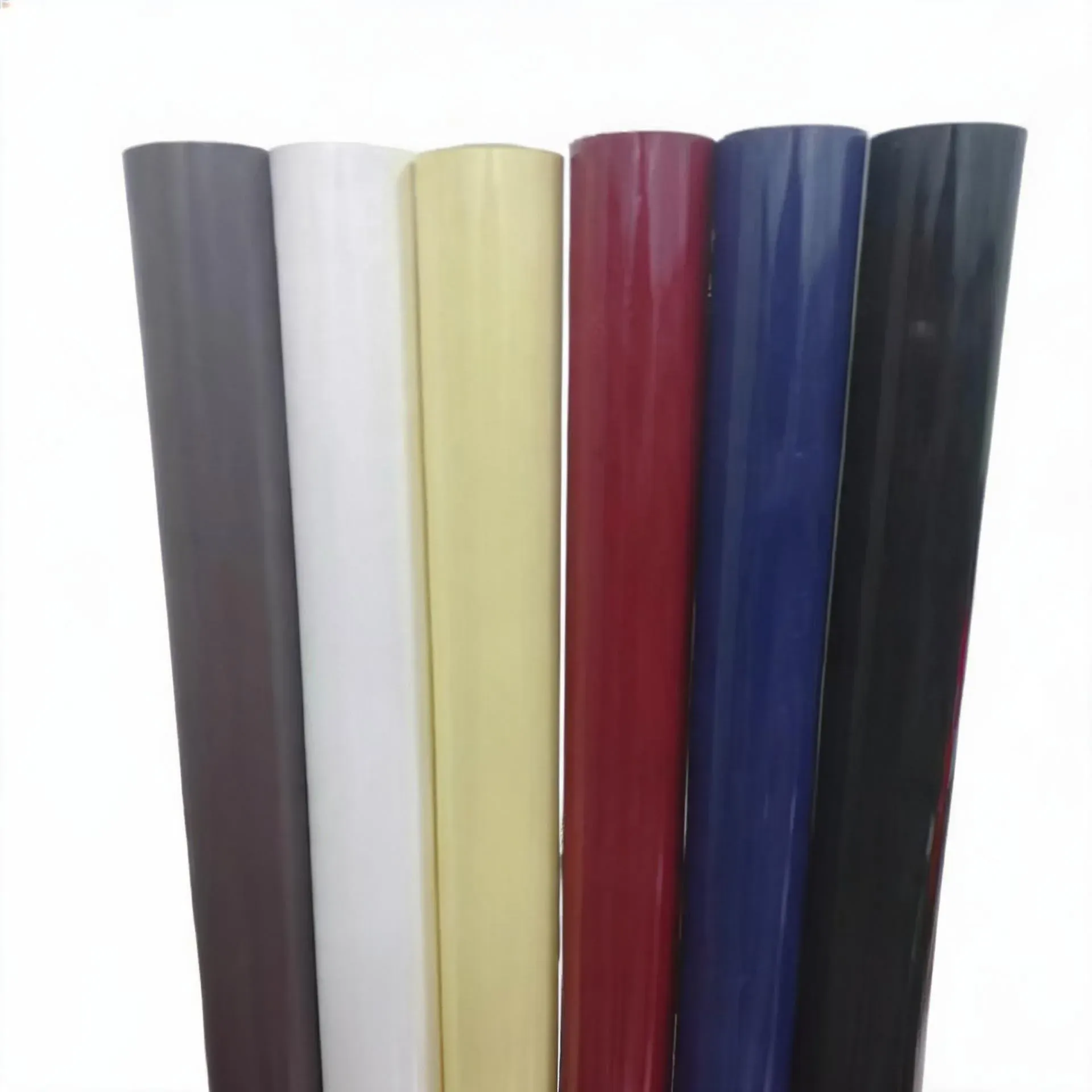
Hot stamping foil is a transfer layer: a 12 micron PET carrier film, a release coat, a color layer, usually a metallized layer, and a heat-activated adhesive - pigment foils may have no metallized layer. On the sheet only the decorative stack remains, on the board or the print.
First: does the foil become a food-contact layer? On a carton, label or gift box normally not, because the board or an internal barrier meets the food. It becomes yes on a primary pack with no barrier - a direct wrapper, a lidding film, a stamped inner liner - and only then do migration limits attach to the printed surface rather than the substrate.
Second: what is the pack made of? This picks the standard. Board for aqueous or fatty food goes to 21 CFR 176.170, dry-food board to 21 CFR 176.180, both to GB 4806.8-2022; plastics to Regulation (EU) No 10/2011, the relevant 21 CFR 174 to 178 section and GB 4806.7-2023; coatings to 21 CFR 175.300 (metal, or repeated food-contact use on a functional-barrier substrate) and GB 4806.10-2025 (any substrate), bare metal to GB 4806.9-2023. Japan and Korea use a synthetic-resin positive list and material-specific standards respectively, and India requires a food-grade material plus IS 15495 for the ink.
Third: is it a tobacco or alcohol pack? Then a category rule sits on top - health warnings and ingredient and nutrition labeling, about space and wording, and plain packaging, which also governs surface finish in Australia and Canada and, where a member state has adopted it, in the EU.
One consequence worth stating plainly: no foil supplier can certify a finished pack. Depending on the market the duty sits with the material producer, converter, importer or brand owner. Where the foil itself is the food-contact layer, the foil maker is the material producer for that layer; certifying the finished pack is never the foil supplier's role. Our job is to document what the foil is made of.
02 THE FOOD-CONTACT QUESTION
Europe. Regulation (EC) No 1935/2004 Article 3 requires a food-contact material to be made under good manufacturing practice so that it does not transfer constituents in quantities that could endanger health, change the food's composition unacceptably, or deteriorate its organoleptic characteristics. Article 16(1) requires specific measures to include a declaration of compliance where appropriate, so a DoC is owed for material classes covered by such a measure; Article 16(2) lets member states require one where no measure exists, so board can still face a national declaration. Regulation (EC) No 2023/2006 is the one EU instrument naming inks directly: its annex on inks applied to the non-food-contact side requires printed surfaces not to come into direct contact with food and substances not to transfer into food through the substrate or by set-off.
Paper and board have no specific EU measure, so 1935/2004 and 2023/2006 apply with national rules and any Article 16(2) declaration - the gap converters fall into. For plastics, Regulation (EU) No 10/2011 sets an overall migration limit of 10 mg/dm2, a 60 mg/kg simulant derogation for infant and young-child articles, and a mandatory Union list in Annex I; its scope expressly includes printed or coated plastic articles, so the printed plastic layer is inside while the ink is outside. No harmonized EU measure for printing inks exists. The Swiss ordinance SR 817.023.21 is the positive list for printing inks that brand owners routinely ask for beyond Switzerland, and Council of Europe Resolution ResAP(2005)2 sets out the same principles as a non-binding recommendation. Two numbers get swapped routinely in supplier documents: printing inks is ResAP(2005)2, coatings ResAP(2004)1, and neither is law.
United States. There is no FDA approval of a finished package. Authorization is substance by substance: a food-additive regulation, a Food Contact Notification filed at least 120 days before interstate introduction, or the threshold-of-regulation exemption at 21 CFR 170.39 (dietary concentration at or below 0.5 ppb). For board touching aqueous or fatty food, 21 CFR 176.170 sets a single limit of 0.5 mg/in2 of food-contact surface, with food types and conditions of use selecting only the extractant; dry-food board is governed by 21 CFR 176.180. 21 CFR 175.300 covers coatings on metal or repeated use on a functional barrier, with limits by container type. There is also no federal declaration of compliance; what circulates is a voluntary letter of guaranty that the buyer may ask for.
China works through national food-safety standards. GB 4806.1-2016 is the framework: no standalone migration number, but traceability, a declaration of which standards were followed and which substances are restricted, and the food-contact-use wording or symbol. The material standards carry the numbers: GB 4806.8-2022 for paper and board (total migration 10 mg/dm2, lead 1 mg/kg), GB 4806.10-2025 for coatings, in force since 2 September 2026, and GB 4806.7-2023 for plastics and GB 4806.9-2023 for metals alongside them. GB 9685-2016, as amended in 2025, is the additives positive list; its Annex A lists 1,294 additives in the base text.
Japan and Korea. Japan's positive list for synthetic-resin packaging ran a five-year transition and has applied in full since 1 June 2025, with a purchaser information duty verifiable after the fact. Korea uses material-by-material standards under the Food Sanitation Act instead of a general positive list, and is the only market here whose standards set migration or residual limits for ink components - benzophenone migration at 0.6 mg/L and residual toluene in flexible synthetic packaging at 2 mg/m2.
India. The FSSAI (Packaging) Regulations, 2018 require direct-contact material to be food grade, inks on food packages to conform to IS 15495, and the food business operator to hold a NABL-accredited certificate of conformity for that direct-contact material. The current edition is IS 15495:2020, a code of practice whose clause 5.9 caps the sum of lead, cadmium, mercury and chromium(VI) in printing inks at 100 ppm - a compositional limit on the ink itself, which no other instrument here imposes.
03 THE PACKAGING-WASTE QUESTION
Europe. Regulation (EU) 2025/40 replaces the old packaging directive from 12 August 2026, and is the one heavy-metal rule reaching all packaging rather than a food-contact layer: Article 5(4) caps the sum of lead, cadmium, mercury and hexavalent chromium at 100 mg/kg in packaging or packaging components. Article 6 requires all packaging to be recyclable: designed for material recycling from 1 January 2030 or 24 months after the delegated acts, whichever is later, and separately collectable, sortable and recyclable at scale from 1 January 2035 or five years after the implementing acts, whichever is later. From 1 January 2030 a pack may be placed on the market only in performance grades A, B or C, and from 1 January 2038 only A or B. Article 7 adds recycled-content minimums for plastic packaging from 1 January 2030 or three years after its implementing act, whichever is later, including 35% outside the contact-sensitive and beverage categories, rising to 65% there from 1 January 2040.
United States. The state-level toxics model limits the same four metals to 100 ppm and was adopted by nineteen states as of the TPCH fact sheet revised in November 2023. California SB 54 is not plastic-only: covered material means single-use packaging of any material plus plastic food service ware, and all of it must be recyclable in the state or eligible for the compostable label by 1 January 2032. Proposition 65 adds a warning route for lead and cadmium. For an unqualified on-pack recyclable claim, the FTC Green Guides require recycling facilities available to at least 60% of consumers or communities where the item is sold; below that the claim must be clearly and prominently qualified, and the Guides are guidance rather than regulation.
China. GB 23350-2021, effective 1 September 2023, is the excessive-packaging standard often missed by an export packer. It caps layers at 4, or 3 for grain and its processed products; caps void space from 85% down to 30% as single-piece net content rises; and caps the cost of packaging other than the layer touching the contents at 20% of the sales price. Alcoholic beverages are expressly in scope, listed in Annex A Table A.1 with a necessary space coefficient of 13.0.
Japan and Korea add producer obligations rather than product limits. Japan's containers and packaging recycling law, enacted 1995, splits duties between consumers, municipalities and specified operators. Korea requires a packaging material and structure evaluation before market, displays the result on the pack, and can impose a surcharge of up to KRW 1 billion for non-compliance.
Whether a metallized foil is recyclable is a separate question, and the evidence is unflattering on plastic and unresolved on fiber. RecyClass, the European design-for-recycling scheme, lists metallization and aluminum as non-compatibility barriers on natural PE films and metallized labels as a non-compatibility facestock; the Association of Plastic Recyclers classes metal foil labels on PE flexible packaging as rendering the pack non-recyclable, because they can alarm metal detectors and the pack is discarded. Neither names hot stamping foil, and on a fiber pack the effect depends on the de-inking and repulping route, not those tables. Both are voluntary, not law. The voluntary standard ISO 14021 requires self-declared recyclability claims to be substantiated and not misleading, the voluntary standard ISO 14024 covers third-party ecolabel programs, EN 13432 covers compostability and anaerobic treatability but not recyclability, and the EU Green Claims Directive is still a proposal - on 4 November 2026 the Commission listed it among those it intends to withdraw. So we will not call a foil recyclable: ask for the structure and test it under the scheme your market uses.
04 THE TOBACCO QUESTION
Europe. Directive 2014/40/EU requires the combined health warning to cover 65% of both the external front and back of the unit packet and any outside packaging, and sets minimum cigarette packet height at 44 mm and width at 52 mm. Article 15 requires an indelible unique identifier not hidden or interrupted, Article 16 a tamper-proof security feature with visible and invisible elements, with technical standards in Implementing Regulation (EU) 2018/574 and Implementing Decision (EU) 2018/576.
Article 13 is the part that surprises people. It prohibits any element or feature that promotes the product, creates an erroneous impression about its characteristics, health effects, risks or emissions, or suggests biodegradability or environmental advantages. On a tobacco pack an environment-friendly message is therefore a compliance risk, not a marketing opportunity. Nothing in the directive names metallic foil, holographic effects or embossing: Article 13 is technology-neutral, and plain packaging is a national measure member states may adopt, not an EU-wide requirement.
Australia and Canada are the two plain-packaging markets covered here, and two of their rules pull in opposite directions. Australia's Tobacco Plain Packaging Act 2011 prohibits decorative ridges, embossing and other embellishments, requires a matte finish in one prescribed color from 1 October 2012, and has made retail sale of non-compliant packs an offence since 1 December 2012. Canada's SOR/2019-107 does the same in substance, in force from 9 November 2019 with retail compliance from 7 February 2020. Both ban decorative foil on the outer pack - and both require the cigarette pack lining to be silver colored foil with a white paper backing, itself matte. The regime removes decorative foil and mandates functional foil across the Act and its Regulations - the clearest example here of the difference between a decorative effect and a material.
China requires the warning on both front and back at not less than 35% of the face it appears on, in Heiti, minimum font height 7.0 mm on cartons and 4.5 mm on packs, and a color difference of at least 40 between text and background. No pictorial warning is required by that instrument. The United States needs careful wording: the 2009 statute requires one of nine rotating textual statements across the top 50% of the front and rear panels, and the graphic-warning rule is not in force - vacated, reinstated on appeal, then postponed by a preliminary injunction affirmed on 18 August 2026, with a separate vacatur on appeal and FDA stating that litigation remains pending. There is no federal plain-packaging requirement.
So the constraint splits by market. In the EU generally, at federal level in the United States and in China, it is the space left for decoration and the wording, not the material's chemistry: a panel that eats into a 65%, 50% or 35% warning area fails before anyone asks what the foil contains. In EU member states that adopted plain packaging, and in Australia and Canada, the finish itself is restricted. In Australia and Canada the functional inner lining is not merely allowed but specified.
05 THE WINE AND SPIRITS QUESTION
Europe. Regulation (EU) No 1169/2011 Article 13(1) requires mandatory particulars not to be hidden, obscured, detracted from or interrupted by any other written or pictorial matter or any other intervening material - the last phrase catching a foil laid over a mandatory particular. For wine the rules changed on 8 December 2023: nutrition declaration and ingredient list became mandatory, and Regulation (EU) 2021/2117 permits an electronic label, so the ingredient list may be provided entirely by electronic means identified on the package while the energy value stays on the pack - provided no user data is collected or tracked, the information is not shown with sales or marketing material, and the allergen indication still appears on the pack. A QR code on the back label is now a compliance channel, not a marketing extra. Regulation (EU) 2019/787 governs the definition, description and labeling of spirit drinks and contains no substantive packaging-material requirements, though a GI product specification may add packaging requirements.
United States. 27 CFR Part 16 requires the two-sentence government warning on a contrasting background, with GOVERNMENT WARNING in capitals and bold and the rest not bold, at a minimum type size of 1 mm up to 237 mL, 2 mm up to 3 L and 3 mm above that. TTB regulates label content, container geometry and fill, not packaging materials, so a foil capsule or neck decoration is not a TTB object while the warning is.
China. GB 7718-2011 remains the operative prepackaged-food labeling standard until 16 March 2027, when GB 7718-2025 takes effect, so a pack designed today can fall under either depending on when it ships. GB 23350-2021 applies on top, which is where the gift-box question usually ends up.
The thread across the three: wine and spirits packaging is constrained by label real estate. Gold foil on a shoulder, a neck band or a carton face is unremarkable; foil that crowds the warning or the mandatory particulars is the defect.
06 WHAT TO ASK FOR IN WRITING
Compliance is a document trail, and it differs by market. Europe: a declaration of compliance for each material class covered by a specific measure, a GMP statement on the printing stages, and a Swiss Annex 15 declaration if the brand owner asks for the ink positive list; nothing in EU law certifies the foil. United States: a letter of guaranty and, where a substance relies on one, the FCN reference from the substance manufacturer, since that notification is held upstream.
China: where the foil is the food-contact layer, the GB 4806.1-2016 declaration, the food-contact marking or symbol and GB 9685-2016 additive confirmation; for a foil on a carton, the board or carton supplier provides those depending on who produces the food-contact article, and the foil supplier provides composition and structure. Japan: the Food Sanitation Act information transfer, in whatever form the supplier records it since no single format is prescribed, verifiable after the fact. Korea: the packaging material and structure evaluation result, which also carries the recyclability judgment. India: the NABL-accredited certificate of conformity for the direct-contact material, held by the food business operator, plus IS 15495 conformance for the ink.
Two items no regulation hands you. One is a heavy-metal test report or declaration per component against the four metals, because the limit applies to the sum in the packaging or its components and the pack owner aggregates the evidence. The other is a structure statement - carrier thickness, whether a metallized layer is present, adhesive type - because a recyclability assessment needs it and it is often missing from a supplier pack.
Send us the pack, the market and which layer touches food. That decides which documents are relevant, and we will say which we can supply and which we cannot.
07 NEXT STEP
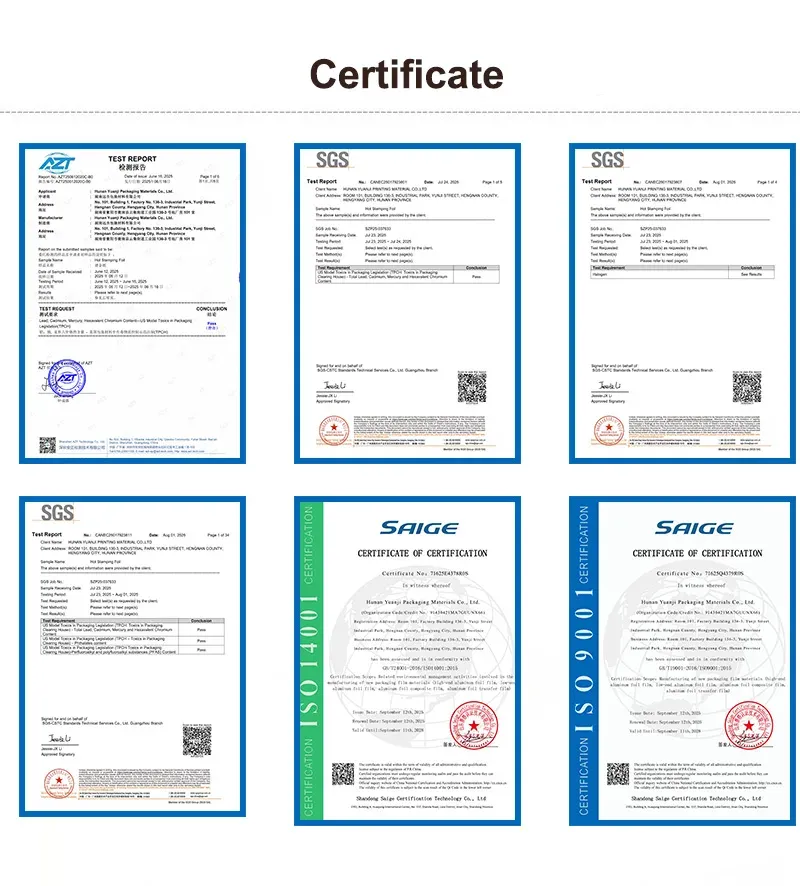
Send the pack structure, the destination market and whether the print ever contacts food directly. We will map it to the rules above, say which documents we can provide and which belong elsewhere in the chain, and quote a trial on your stock. Yuanji Foil is a hot stamping foil manufacturer in Hengyang, Hunan, with a 20,000 m2 plant, a 1650 mm vacuum coating machine, more than 10 coating machines, 4 holographic embossers, ISO 9001 and ISO 14001 management-system certificates, and import and export rights. Those certificates cover how we manage quality and environment; they are not product-compliance certificates, and we do not present them as such.