Buying Guides
Hot Stamping Foil for Cosmetic Packaging
Choose the foil finish for cosmetic cartons, then test adhesion and check the EU packaging rules.
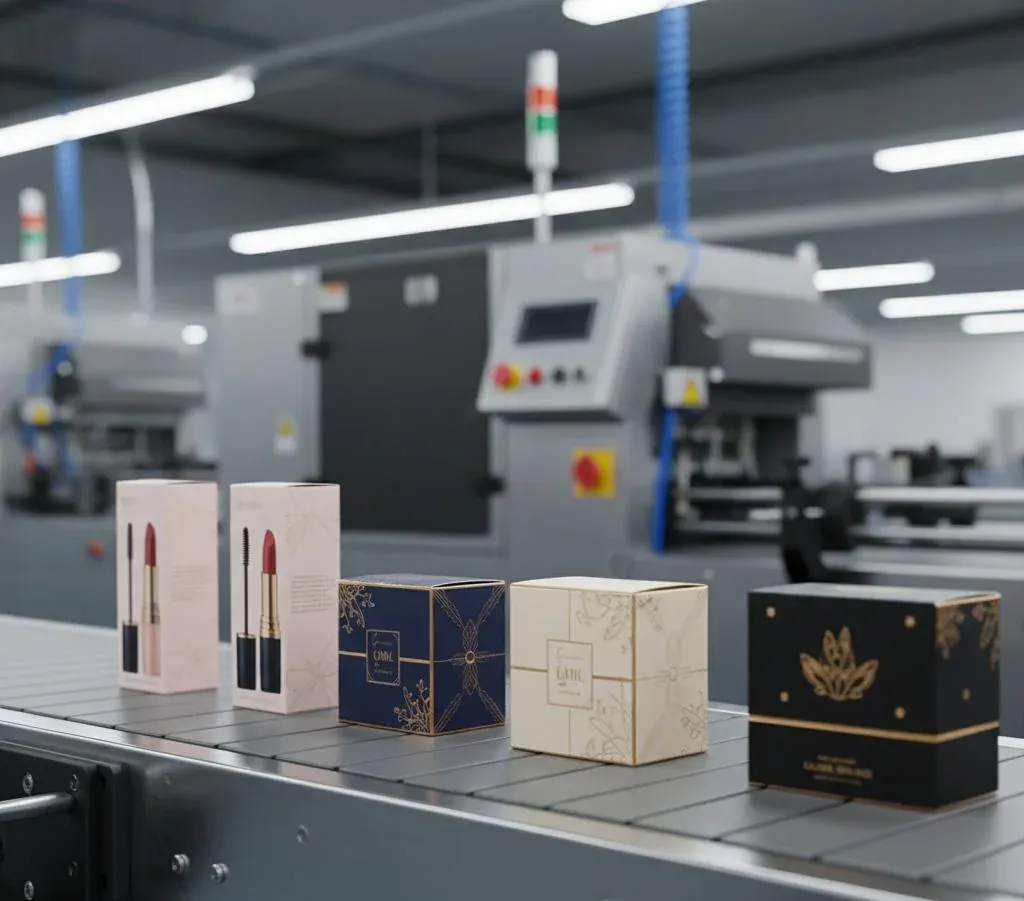
QUICK ANSWER
For cosmetic cartons, choose the effect first - standard gold or silver, holographic, pearlescent or cold foil - then prove the printed surface on three counts: wiping with solvent, scratching, and adhesion. Our paper grades all run at 90-120 C; cold foil transfers at 160 W/cm2 or more. Then read the EU law section, because most briefs chase the wrong regulation.
01 WHY COSMETIC PACKAGING IS A HARDER JOB
The decoration on a cosmetic carton is usually the brand. It also does more work than most packaging: it is handled repeatedly, travels in bags, and gets wiped clean. A scuffed logo reads as a defective product, not a worn one.
Production adds a second constraint: cosmetic work is often small-area, high-detail stamping on coated or varnished board, with fine type and thin rules. That rewards a foil that releases cleanly inside its temperature window, and punishes one that has to be pushed hot to transfer at all.
02 FOUR EFFECTS AND WHERE EACH FITS
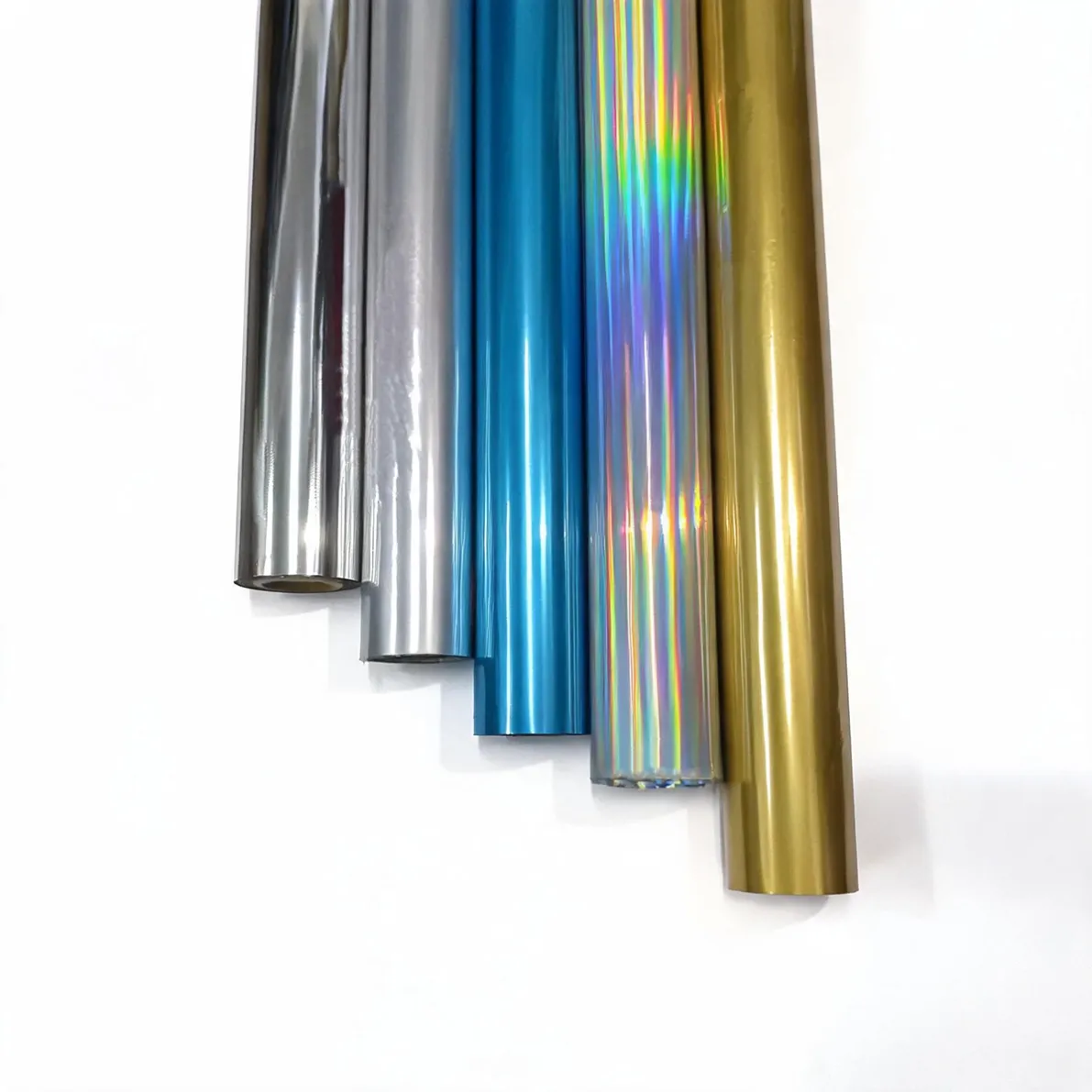
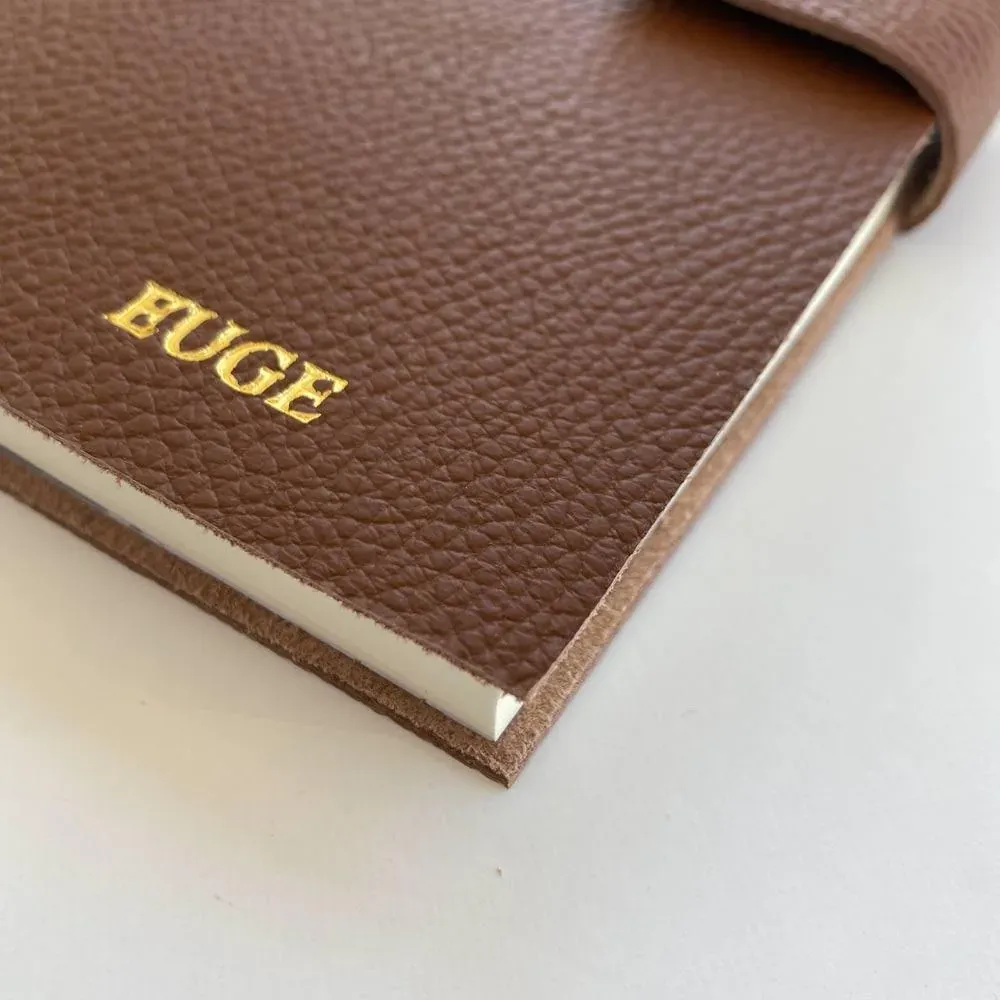
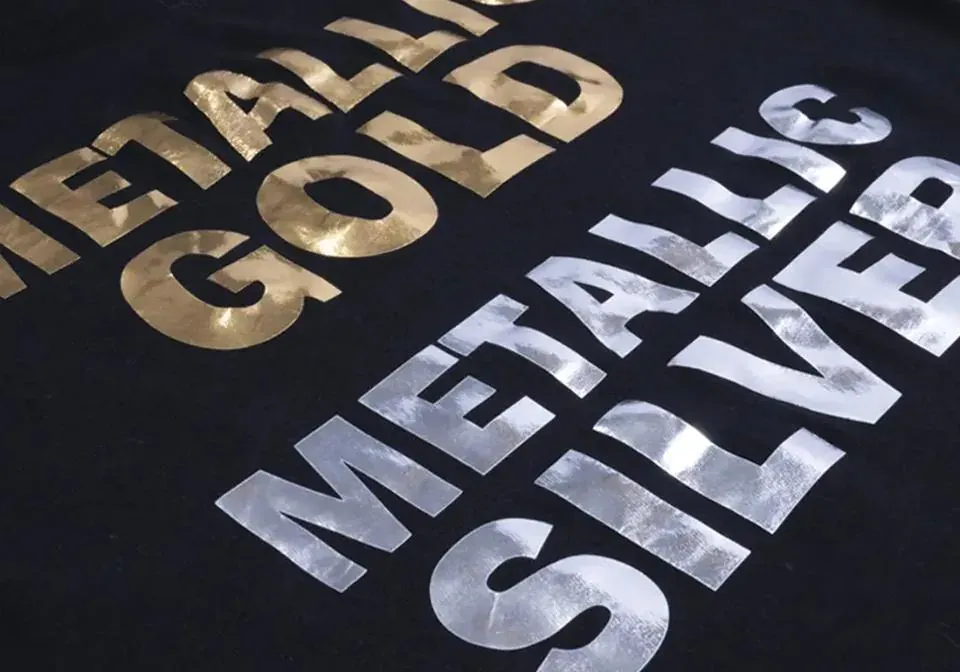
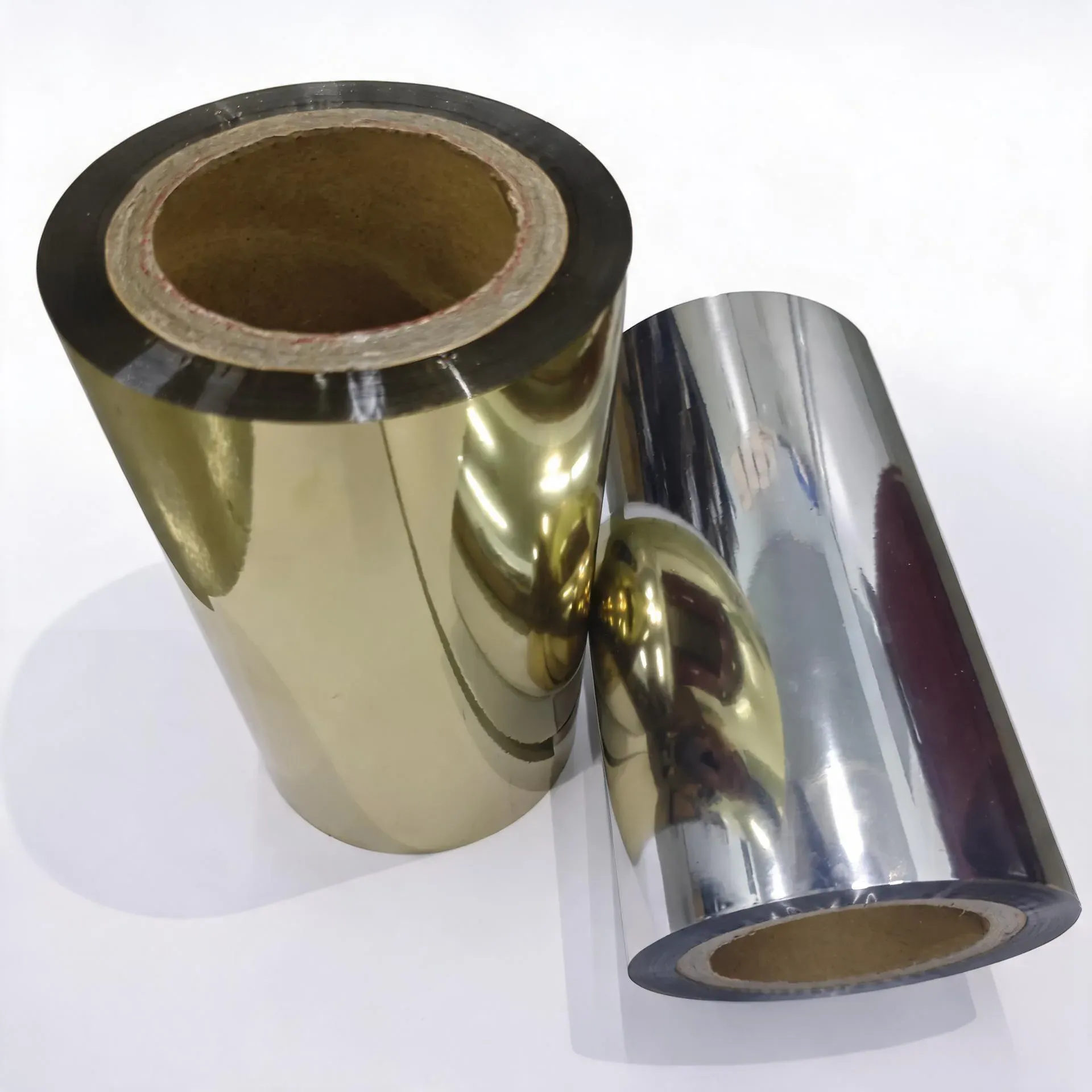
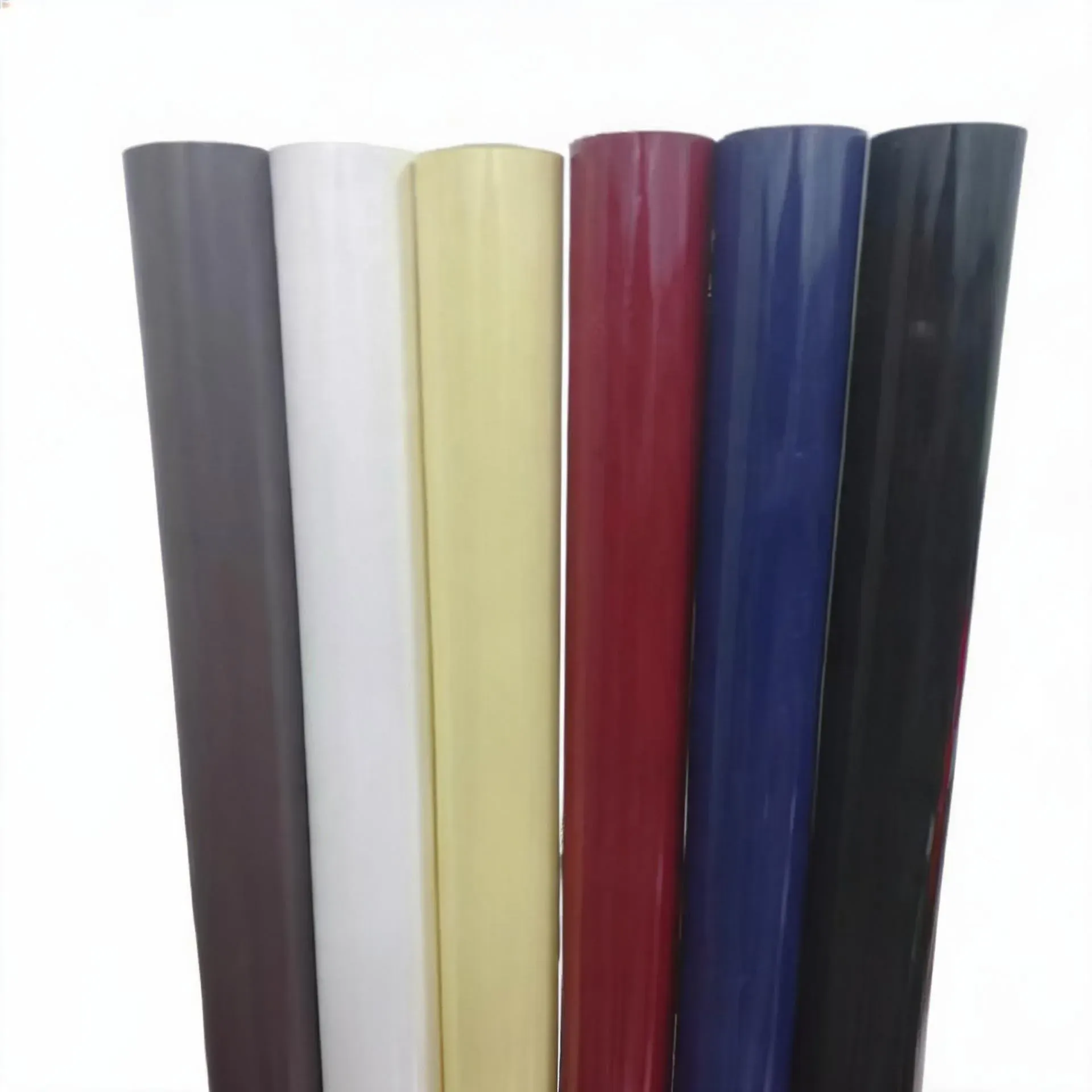
Standard gold and silver. Our paper grades are rated 90-120 C for cartons, cards and labels. Our coated and plastics grades, also 90-120 C, cover flat-bed and roller stamping, small to large areas, UV-ink paper and OPP-laminated paper.
Holographic. A rainbow or geometric effect that shifts with the viewing angle. Our holographic grade is rated 90-120 C and is specified for cosmetic boxes alongside wine boxes, book covers and gift packaging - it is the one grade in our range whose application data names cosmetic boxes explicitly.
Pearlescent. A satin metallic rather than a mirror finish, for brands that want luxury without hard gloss. Rated 90-120 C, for premium cards, premium packaging paper and boxes.
Cold foil. A different process, not a different color: it transfers onto a UV-curing adhesive at 160 W/cm2 or more, at 35 m/min on paper, and suits UV-coated single-sheet offset paper and white card where the artwork needs fine detail.
03 THREE THINGS THE PRINTED SURFACE HAS TO SURVIVE
Each is a different failure mode, so each needs its own kind of test.
Rubbing and wiping. Two distinct modes live here. For chemical and solvent resistance - alcohol or solvent wiping during packing or use - ISO 2836:2021 assesses how a print resists a range of agents including solvents, and ASTM D5402-19(2024) is the standard practice for solvent rubs. Note what that practice does and does not do: it sets the method, not the solvent, the number of rubs or the pass criteria - those you agree with your customer. Dry mechanical rubbing is a separate mode; agree a method with the customer rather than borrowing a solvent-rub standard for it.
Scratching. Scratches show as fine bright lines on a matte background or dull patches on a mirror finish. ISO 1518-1:2023 covers scratch resistance by the constant-loading method. Scuffing and abrasion are separate modes again - if the pack must resist them, name an agreed method for those too.
Adhesion. If the foil lifts rather than wears, the question is how well the stamped layer is anchored - assessed with ISO 2409:2020 (cross-cut) or ASTM D3359-23 (tape test). All of these are industry methods for a finished surface; none is a certificate.
04 WHAT EU LAW ACTUALLY REQUIRES
This is where many cosmetic packaging briefs go wrong, so it is worth being precise.
The EU cosmetics regulation, 1223/2009, does not set heavy-metal or migration limits for packaging, and it does not prescribe packaging test methods. For packaging material safety it touches packaging in two places: Article 17 allows traces of prohibited substances that arise from unavoidable migration from packaging, subject to the product safety requirement in Article 3; and Annex I point 4 requires the safety assessment to describe the relevant characteristics of the packaging material, in particular purity and stability. That is a safety-assessment obligation, not a limit value.
The specific 100 mg/kg limit for heavy metals in packaging sits in packaging law instead. Regulation (EU) 2025/40 limits the combined concentration of lead, cadmium, mercury and hexavalent chromium in packaging to 100 mg/kg in Article 5(4). Under Article 71, the Regulation applies from 12 August 2026, and Article 70 repeals the old Directive 94/62/EC - which had set the same four metals at 100 ppm - with effect from the same date, subject to transitional exceptions. This is a general requirement for all packaging placed on the EU market, not a cosmetic-specific rule, and REACH restrictions may also apply.
Two common errors worth correcting in your own brief. The food-contact framework, 1935/2004, applies to materials intended to contact food, not cosmetics. And RoHS, 2011/65/EU, applies to electrical and electronic equipment, so for an ordinary carton a RoHS request is contractual or a technical specification, not a statutory requirement. Migration data is different: it is not a statutory packaging limit and no test method is prescribed, but the safety assessment under Article 17 and Annex I point 4 may still need it.
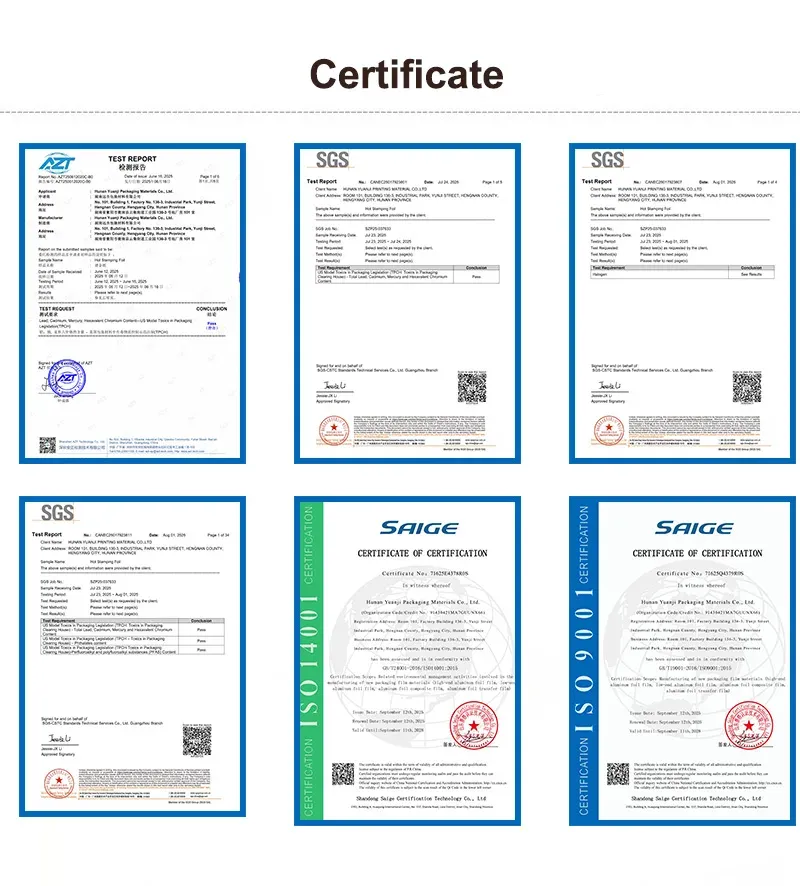
What we can supply toward that: we hold ISO 9001:2015 and ISO 14001:2015 management-system certificates, and we keep third-party RoHS and heavy-metal test reports on file. Those are reports about our materials, not a compliance certificate for your finished pack - the pack's compliance depends on every component and on your own declaration.
05 THE SPECIFICATION TO AGREE BEFORE THE RUN
Set five things before the first bulk order. The substrate, named precisely - coated art paper, white card, OPP-laminated paper, UV varnish - with grammage and finish. The effect, with a retained physical reference sample rather than a screen color. The temperature window you will run, inside the 90-120 C range for paper; for cold foil, agree energy and speed separately. The durability the surface must meet, with the test method and the acceptance level named. And the artwork limits: minimum line width and minimum letter height, agreed against a stamped proof rather than a file.
Then stamp a trial at both ends of the temperature window, on the actual board and at production speed. Small-area, high-detail cosmetic work is exactly where a flat sample looks perfect and the production run does not.
06 NEXT STEP
Send us your artwork, the board you will print on, and one line saying what the surface must survive - for example "wiped with alcohol after packing" or "handled on a shelf for two years". We will name the grade, send a sample, and tell you which test to run on your own board. Yuanji Foil is a hot stamping foil manufacturer in Hengyang, Hunan, producing standard, cold stamping, holographic, pigment and coffee-tone foils.