Product Knowledge
Hot Stamping Foil for Home Textiles
Curtains, upholstery and bed linen fail differently — and our data records no light fastness.
QUICK ANSWER
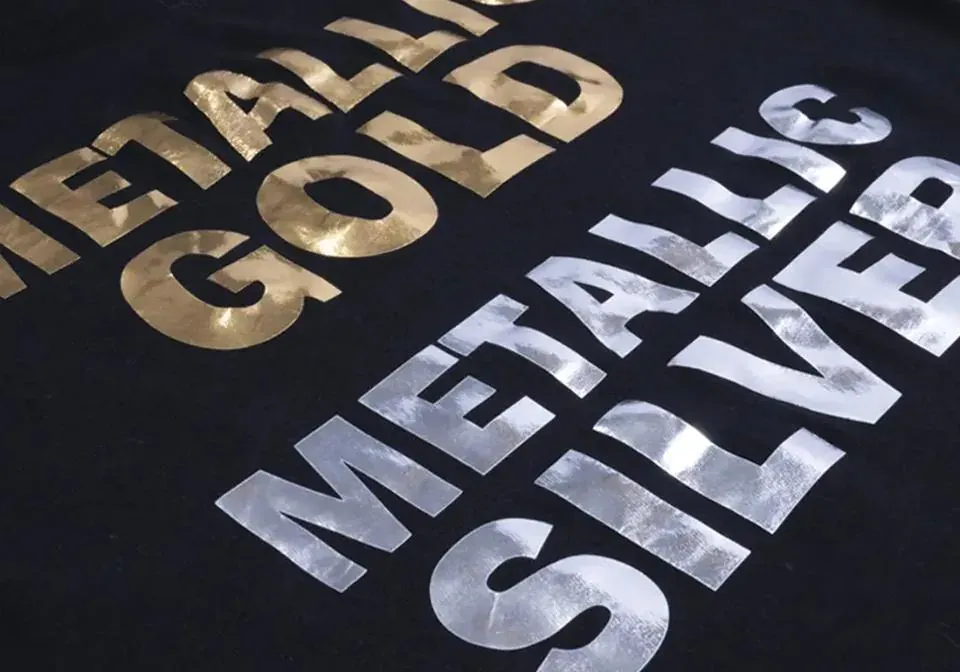
A home textile is not judged on the same duty as apparel or footwear, and that changes what you test. A curtain is typically judged on what years of light do to it. Upholstery is judged on rubbing and on being cleaned. Bed and table linen is judged on washing. Our application data records water-wash resistance for the printed-adhesive textile route and records nothing about light at all, so if a customer asks how a stamped panel will look after a season in a window, the answer has to come from a test on your own fabric rather than from a grade description. The two recorded textile routes are set out in our textile article; what this article adds is the light question, the product-by-product duty split, and one trap that catches people testing a stamped fabric.
The two recorded textile routes, and how to test wash resistance, are set out in our article Textile Hot Stamping Foil for Polyester Fabric: Which Route Fits. This article does not repeat them.
01 THE DUTY DIFFERS BY PRODUCT
Home textiles are one product family with several different working lives, and the foil is asked to survive a different thing in each.
A curtain hangs in light. It is washed rarely, sometimes only dry-cleaned, and its dominant risk is not abrasion but the change that light produces over time - fading, and the dulling or color shift that makes a panel stop matching the rest of the room.
Upholstery is the opposite case. It is rubbed by bodies and clothing, it meets oils and cleaning agents, and it may be cleaned by a method the end customer chooses rather than one you specify. Light reaches it, but the property that fails first is usually surface wear.
Bed linen and table linen are laundered repeatedly. Here wash resistance and rubbing typically dominate, and the wash protocol matters more than anything else, which is why it belongs with the customer's own specification rather than with a generic claim.
Cushions and throws sit between these categories. They take window light and handling, and they are washed occasionally. There is no single answer for the family, and that is the point.
02 THE LIGHT QUESTION, WHICH OUR DATA DOES NOT ANSWER
Our application data records water-wash resistance on the textile row. It records nothing on light fastness - no figure, no grade, no hours of exposure - for any of our grades. That is a fact about the record, and it is worth stating plainly because it is the question a curtain buyer asks first.
So the answer has to be a test, and the correct method is a real one: ISO 105-B02:2014, Color fastness to artificial light using a xenon arc fading lamp. It is a color-fastness method for the finished material, not a foil certification, and it carries no pass level we can quote.
Two things are easy to get wrong here. ISO 105-B02 is the artificial-light method; ISO 105-B01 is daylight and ISO 105-B04 is weathering, so citing the wrong part answers a different question. And light fastness is not the same property as the color fastness to washing or to rubbing - a panel can pass a wash test and still fade in a window, or pass a light test and still fail a wash.
What you can do before the test is choose where the mark goes. A design on a leading edge, a tie-back or a panel that faces the glass directly sees far more light than one on a lining or a reverse face. That is a design decision, not a grade decision, and it costs nothing to make early.
03 THE ABRASION TRAP ON A STAMPED FABRIC
This is the part of home-textile testing that catches people out, and it is worth being precise about.
The Martindale abrasion standards for textiles are the ISO 12947 series: Part 2 determines specimen breakdown, the end-point of the test, and Part 4 assesses appearance change. Both are widely used on upholstery fabric, and both are the right family for an uncoated textile fabric. A coated or laminated fabric falls outside Part 2's scope, whether or not it carries a foil stamp.
But ISO's own scope statement for Part 2 excludes coated fabrics, including laminated fabrics. The stamped area behaves as a coated or laminated surface for abrasion purposes, so Part 2's coated-fabric exclusion applies to that area. Citing ISO 12947-2 for a stamped panel as if it were ordinary textile is a scope error, and it is one a customer's test house will notice. For a coated surface the nearest published methods are the ISO 5470 series: Part 2 for the Martindale method on a coated surface, Part 1 for Taber if the customer specifies it. We searched the ISO catalog for a standard written specifically for a hot-stamping foil or a metallized transfer film on fabric and found none, so on the stamped area itself the protocol may have to be adapted and agreed with your customer or their test house.
The practical consequence: agree with your customer which surface is being tested - the base fabric, or the stamped area - and which method applies to that surface. If the answer is the stamped area, expect to adapt a published method and agree the acceptance criteria with your customer rather than quoting a clause.
04 WASH ROUTES, AND WHERE THE RECORD STOPS
For the printed-adhesive textile route, our data records good water-wash resistance. That is the only row in our application table where a wash property appears, and it attaches to that route.
For flocked cloth and satin that arrive with their adhesive layer, the no-glue route, our data records no wash property. That does not mean the mark will fail a wash; it means the record is silent, so the wash behavior has to be proven on your material rather than assumed from the other route.
Agree the wash protocol with your customer before the order, not after. The published textile article sets out the variables that change the result, how to run the comparison and how to record it.
05 HOW TO PLAN THE PANEL BEFORE THE TRIAL
Two planning questions come before any test, and both are cheaper to answer now than after a sample run.
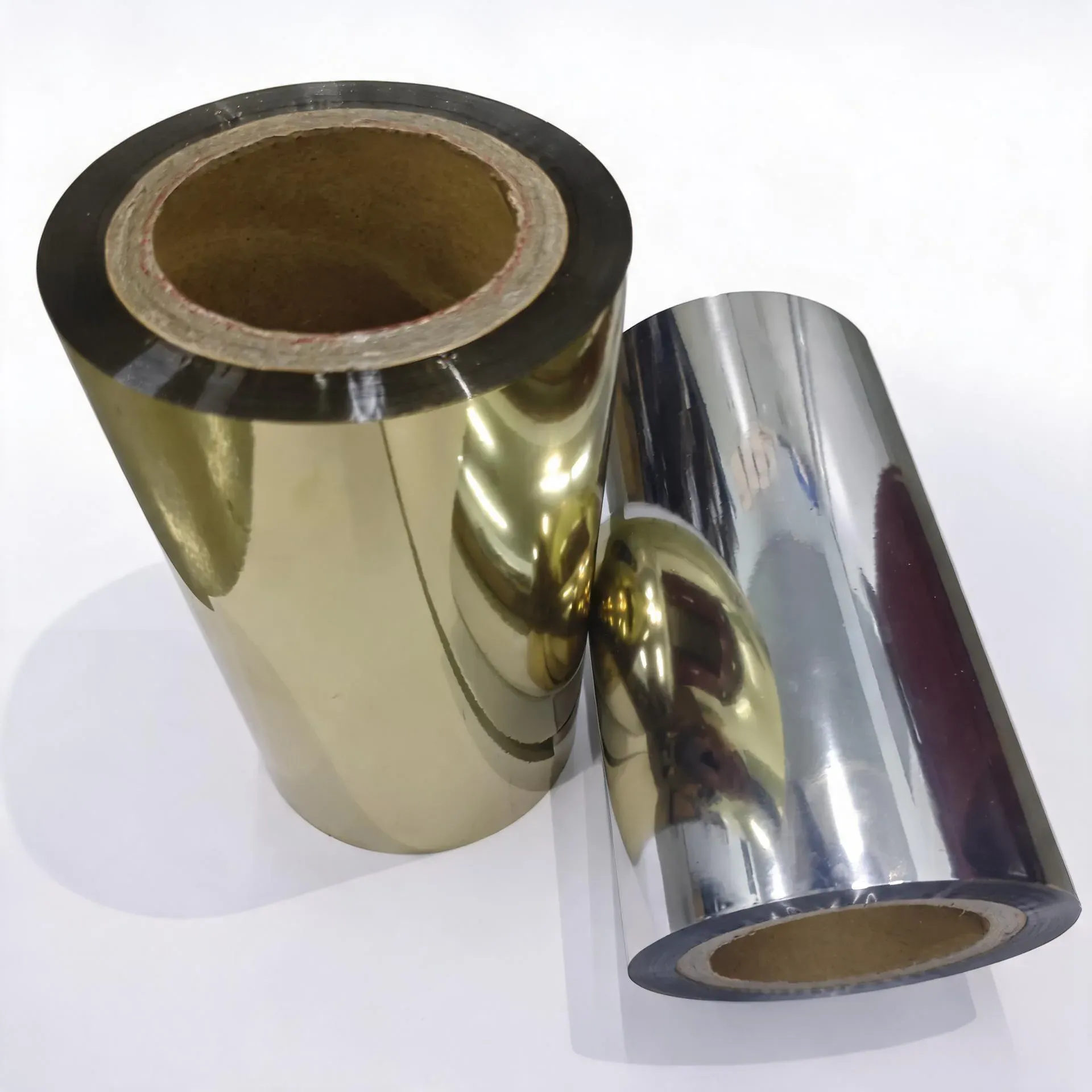
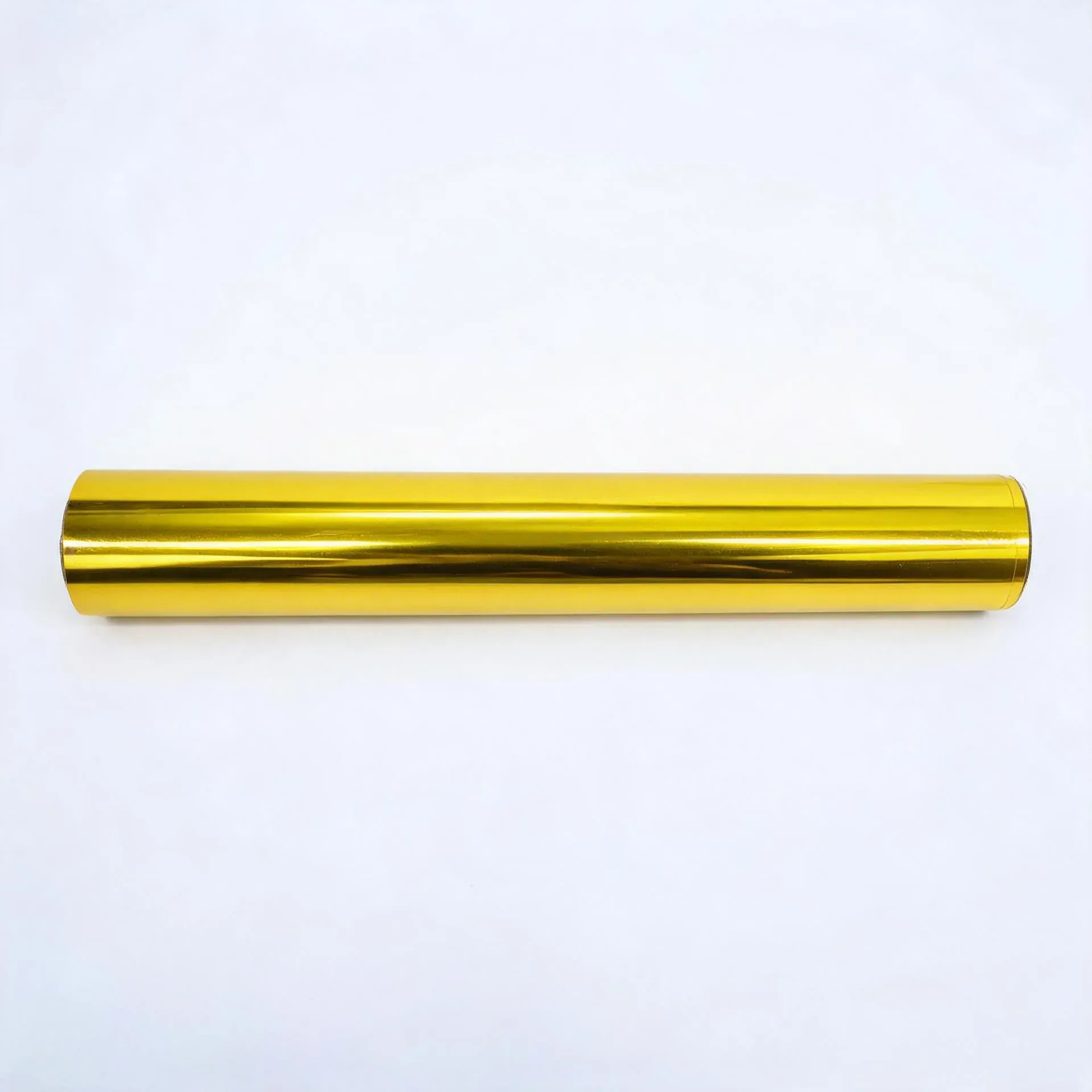
The roll width against the panel. Standard rolls are 0.64 m by 120 m and 1.28 m by 240 m on a 12 micron carrier; other lengths can be customized for larger quantities. A cushion panel or a curtain border that fits inside the narrower width uses the roll efficiently; a wide panel may not, and that affects both yield and how many joins the job needs.
The mark against the construction. On a curtain, a mark near a hem or a seam crosses a zone where the fabric is doubled or stitched, and the die meets a different thickness there. On upholstery, a mark on a panel that will be pulled over a form undergoes stretch that a flat sample does not. Neither is a grade question; both are reasons to trial on the assembled part.
06 WHAT TO SEND US
Send the actual fabric, with its finish and its backing, cut from the production lot, and say which product it becomes - curtain, upholstery, bed or table linen, cushion. Tell us whether the mark crosses a seam, a hem or a stretch zone.
Say which route you can run: whether you can print an adhesive before combining, or whether the material arrives with its adhesive layer. Add the wash or cleaning protocol the finished article must survive, and whether light fastness will be assessed, so the trial can be built around the same checks.
Add your die temperature and dwell, the mark size and finest line width, and whether you stamp flat or roller. Bulk use is preceded by a trial on your own material.
Tell us the product the fabric becomes and what it must survive - light, rubbing, washing, or more than one. Our data answers the wash question on one route and is silent on the rest, so those answers have to come from a trial on your own cloth.
07 NEXT STEP
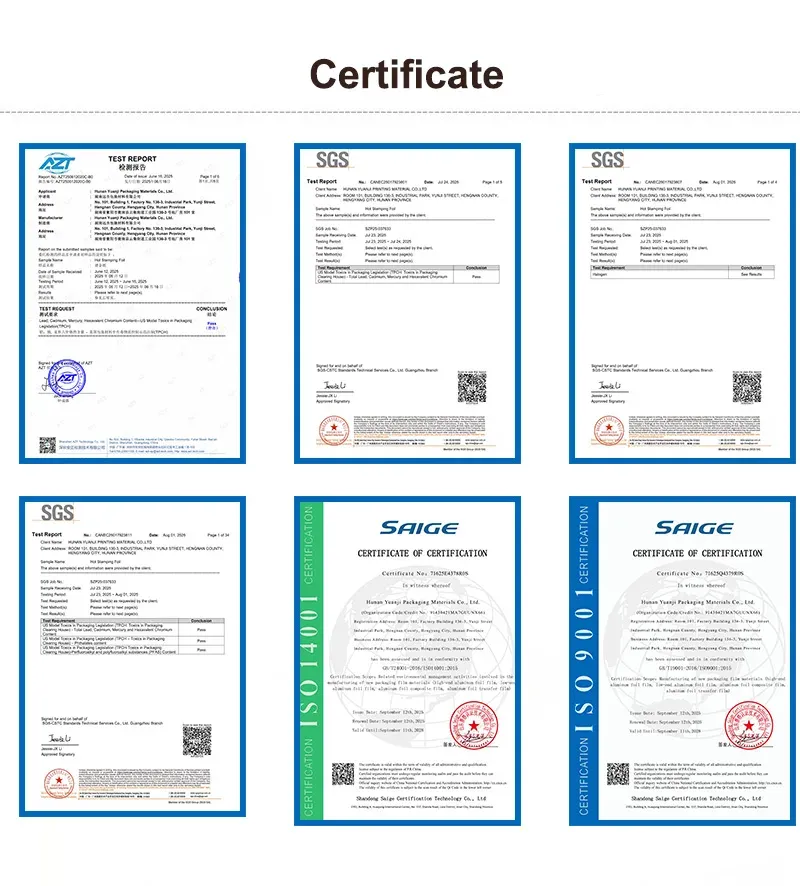
Send a swatch of the actual fabric and tell us what it becomes. We will propose a route and a grade for your trial. Yuanji Foil is a hot stamping and cold stamping foil manufacturer in Hengyang, Hunan, producing standard, coffee-tone, plastic, cold- and hot-stamping, double-sided, pigment, low-halogen and transparent-dielectric foils, including holographic. We hold ISO 9001 and ISO 14001 management-system certificates and import and export rights.