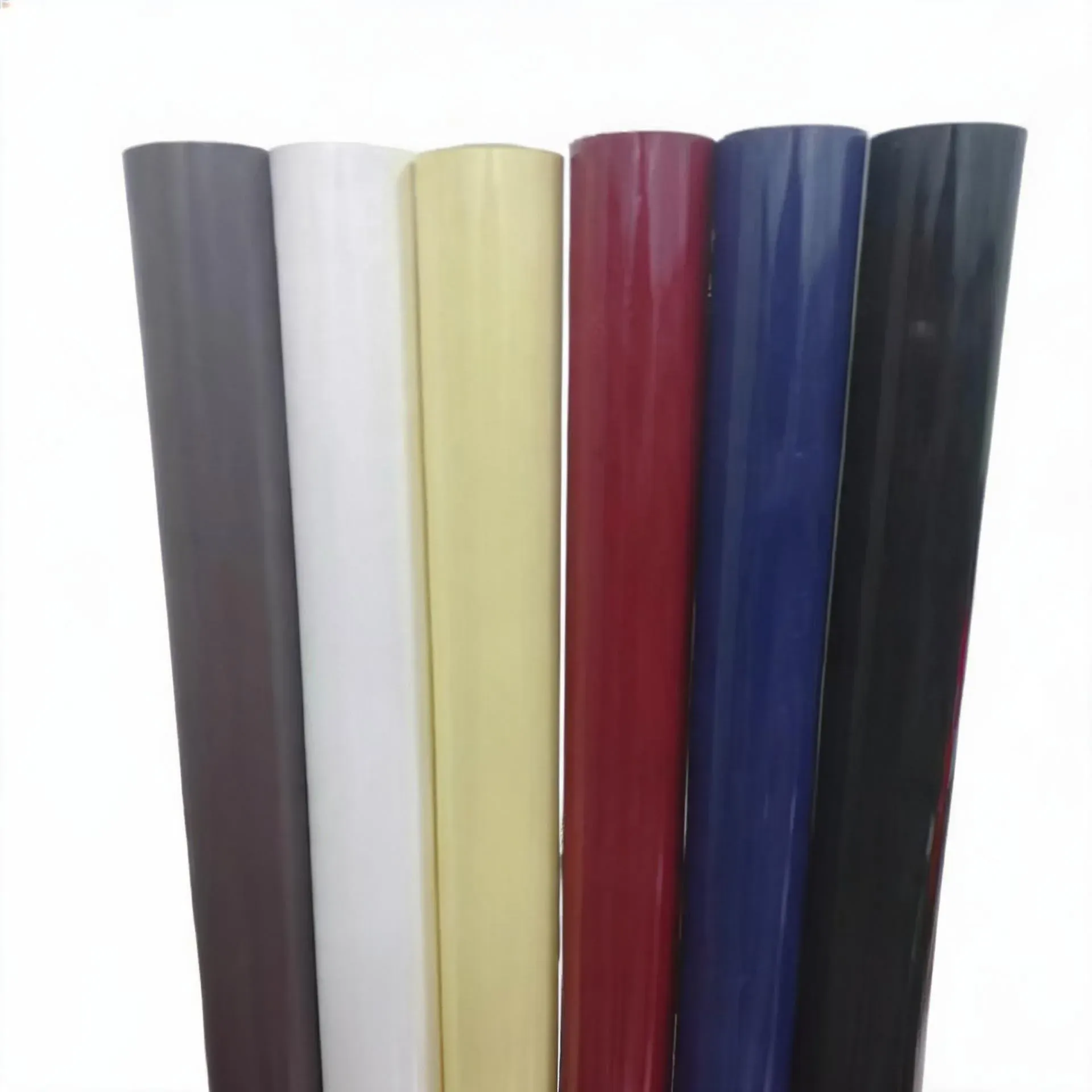
Product Knowledge
Hot Stamping Foil for PU Leather
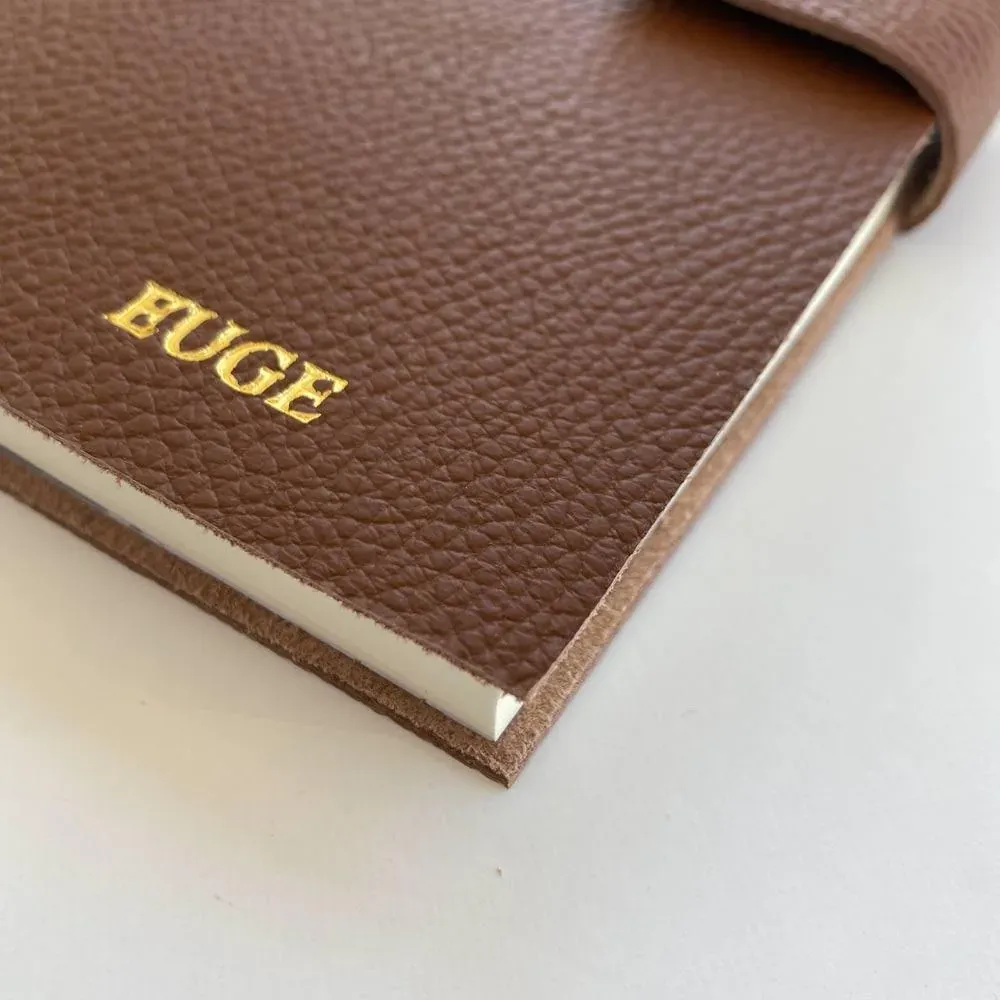
Pick the foil grade for PU leather, then test adhesion through bends and rubs before production.
QUICK ANSWER
For PU leather, PVC leather and genuine leather, use a foil rated for leather and work inside the 90-120 C reference window. Two common failures matter for leather goods - the foil cracking along a fold, and the logo rubbing off where hands and packaging touch it. Test both on your own material before bulk: a flex test (ISO 5402-1) and a rubbing test (ISO 11640) expose problems that a flat sample hides.
01 WHY LEATHER IS NOT PAPER
Paper stays flat and dimensionally stable; leather bends, compresses and recovers. A foil that looks perfect on a flat board can crack the first time a wallet folds, because the stamped layer has to move with the surface underneath it.
PU and PVC leather add a second variable: they are coated fabrics. The finish coat and, where present, plasticisers affect how the foil's adhesive grips, and PVC can behave differently from PU on the same machine setting. Genuine leather varies by tannage, finish and batch, so a grade that worked on last month's hides is not automatically right for this month's.
That is why the sample has to be your material, not a paper swatch from a catalogue.
02 MATCH THE GRADE TO THE SURFACE
Our leather grade is specified for PU leather, PVC leather and genuine leather surfaces at 90-120 C, with good slitting performance.
The same grade is also specified for PVC tablecloth, where the application data cites strong adhesion together with good toughness and ductility.
For artificial leather where a pigment rather than a metallic effect is wanted, our pigment foil also runs at 90-120 C and is specified for artificial leather among other surfaces.
03 WHEN THE FOIL CRACKS ON BENDS
Cracking along a fold usually comes from the stamped layer being less flexible than the material under it. Three common contributors: the die running too hot or dwelling too long inside the 90-120 C window, a foil that is too heavy for a tight fold radius, and stamping straight across a fold line instead of beside it.
In practice: bring the temperature down within the rated window, shorten the dwell, keep the logo off the fold, and match the foil weight to how tight the part bends. Then prove it with a flex test rather than a visual check.
Leather flex resistance is assessed with ISO 5402-1:2022 (Flexometer method) and, for shoe uppers, ISO 5402-2:2015 (Vamp flex method). These are industry test methods for the finished material - a common yardstick you and your customer can both quote - not a certificate that any foil carries.
04 RUB RESISTANCE WHERE THE LOGO SITS
A logo on a wallet, card holder or handbag is rubbed by hands, pockets and packaging constantly. Rub resistance is a separate property from adhesion: a logo can be stuck firmly and still wear dull at the high points.
Two industry methods are used to assess the finished surface: ISO 11640:2018 for colour fastness to cycles of to-and-fro rubbing, and SATRA TM31:2021 (Martindale) for abrasion resistance. These are industry test methods, not foil certifications. Run them on stamped samples from your own leather, and compare the same test before and after any change - grade, temperature or finish.
One practical lever is grade matching: tell us the logo position and how much handling the part sees, and we will match the grade for that duty; you then confirm it with the rub test on your own material.
One distinction worth knowing: if the failure is the leather's own finish lifting rather than the foil coming away, that is a coating-adhesion question, tested with ISO 11644:2022 (adhesion of finish). For goods that will be stored or shipped in cold conditions, ISO 17233:2017 determines the cold crack temperature of the leather's own surface coating.
05 WHAT TO SEND FOR A SAMPLE MATCH
To match a grade, we need: a swatch of the actual material (PU, PVC or genuine leather, with the same finish), the thickness, where the logo sits (flat area, near a fold, or on an edge), the logo size and the finest line width, your machine type, and the die temperature and dwell time you normally use.
With that we can name the grade and send a sample for your own flex and rub tests. Bulk use should always be preceded by a trial on your material - that rule is stated in our product application data.
06 NEXT STEP
Send us a swatch of your leather and a photo of the part you are stamping - we will match the grade and prepare a sample for your test. Yuanji Foil is a hot stamping foil manufacturer in Hunan, China, producing standard, cold stamping, holographic, pigment and leather foils for customers in packaging, plastics, textiles and leather.