Buying Guides
Hot Stamping Foil Price: Why Finish Matters
The finish sets how many stages a roll needs — and how to compare two foil quotes fairly.
QUICK ANSWER
Finish changes how many production stages a roll needs: plain foil adds no pattern step, holographic adds one, and a dark or high-opacity color usually needs more color-layer coverage, while matte tones usually sit in the same coating process as bright ones. That is why five foils used in the same stamping process can carry different costs. Compare quotes only on identical width, length, film thickness, finish and color build, substrate and quantity.
01 WHY THE SAME PROCESS IS NOT THE SAME COST
Buyers often expect hot stamping foil to behave like a single commodity: one process, one price. It is not. Our paper grades are all stamped with a heated die in the same 90-120 C window, but the roll behind that die is built differently depending on the finish you asked for.
The useful rule is this: the process sets the machine, and the finish sets how many stages the roll goes through. Two foils that both run cleanly at 100 C can still differ in how much work their carrier film required before they shipped. That difference is what shows up in a quote.
02 THE FIVE FINISHES BUYERS COMPARE
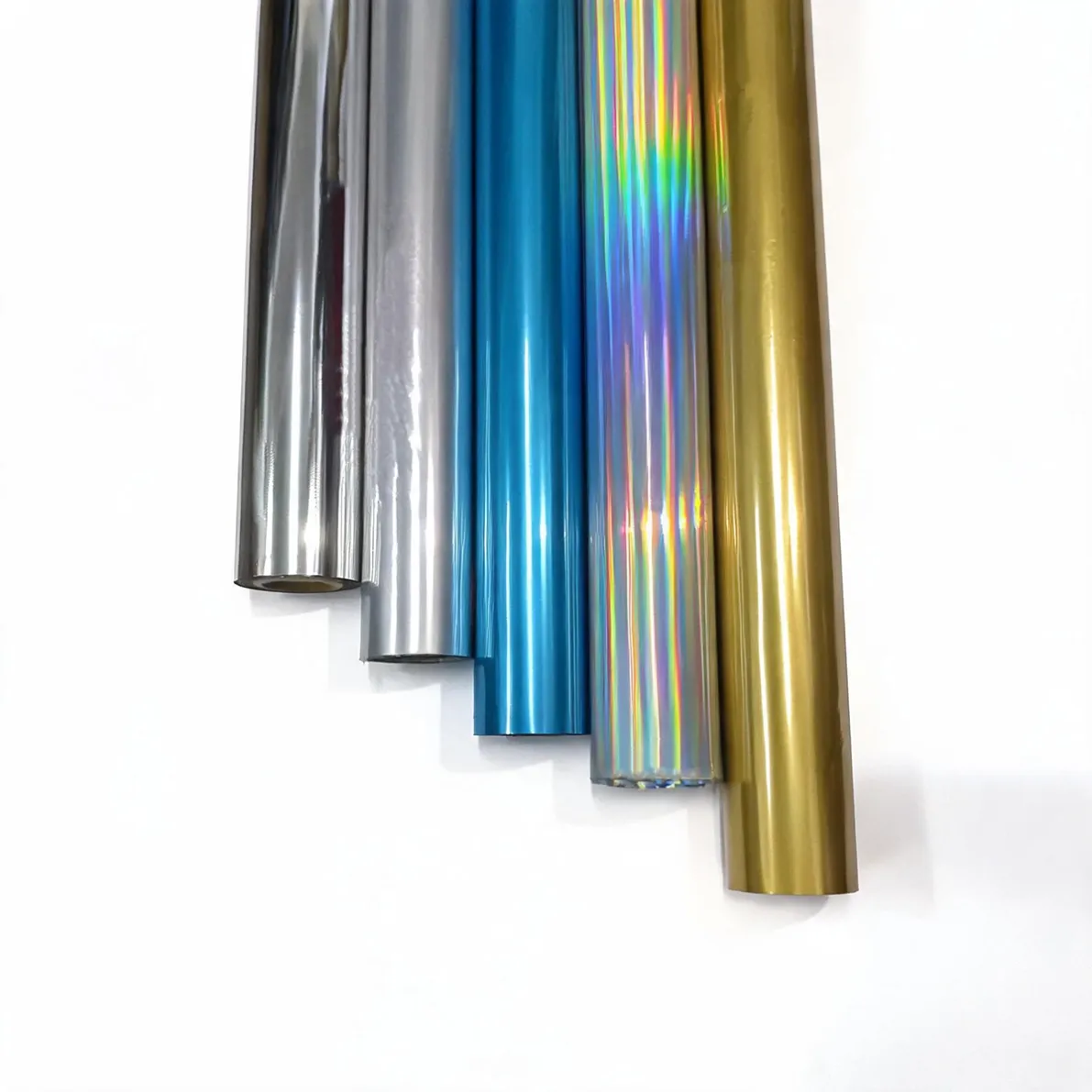
Plain, unpatterned foil. It is the simplest of the finishes to produce: there is no pattern to register and no pattern stage to run. That is why it is the reference point the other finishes are measured against - it carries the fewest production stages.
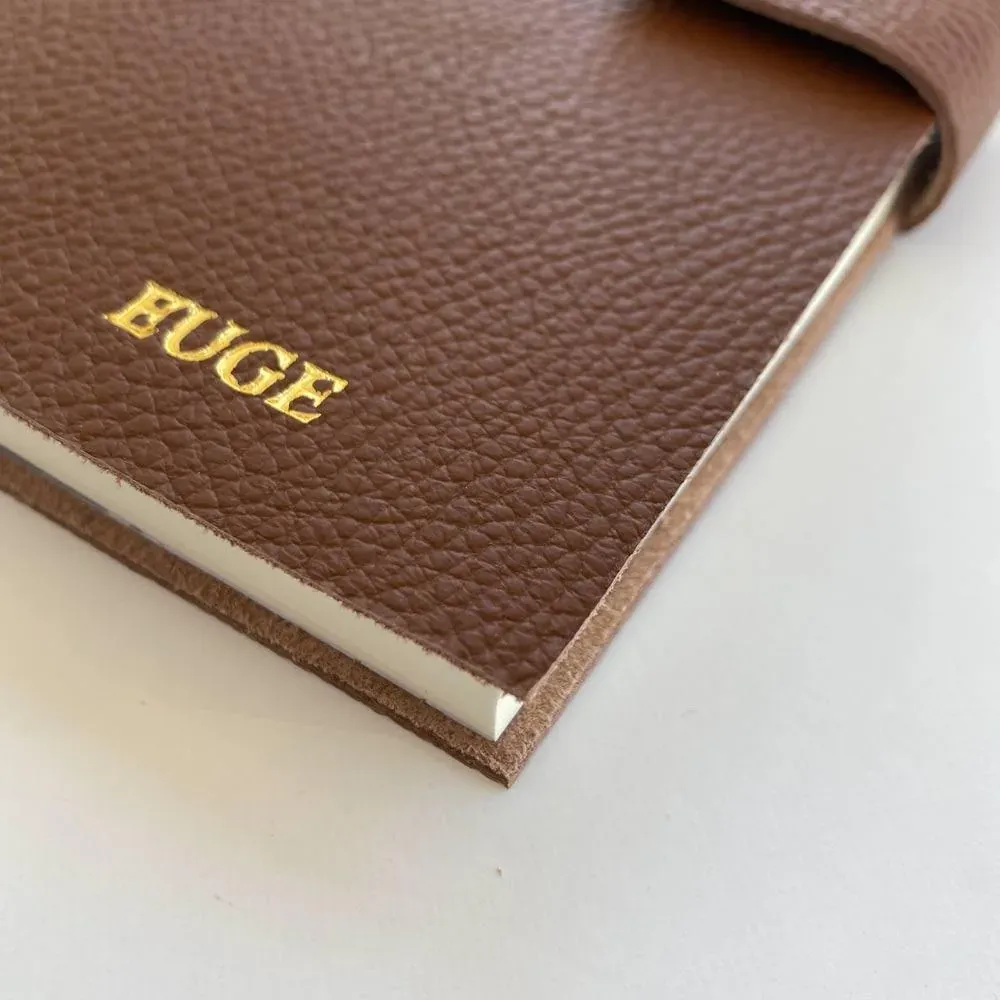
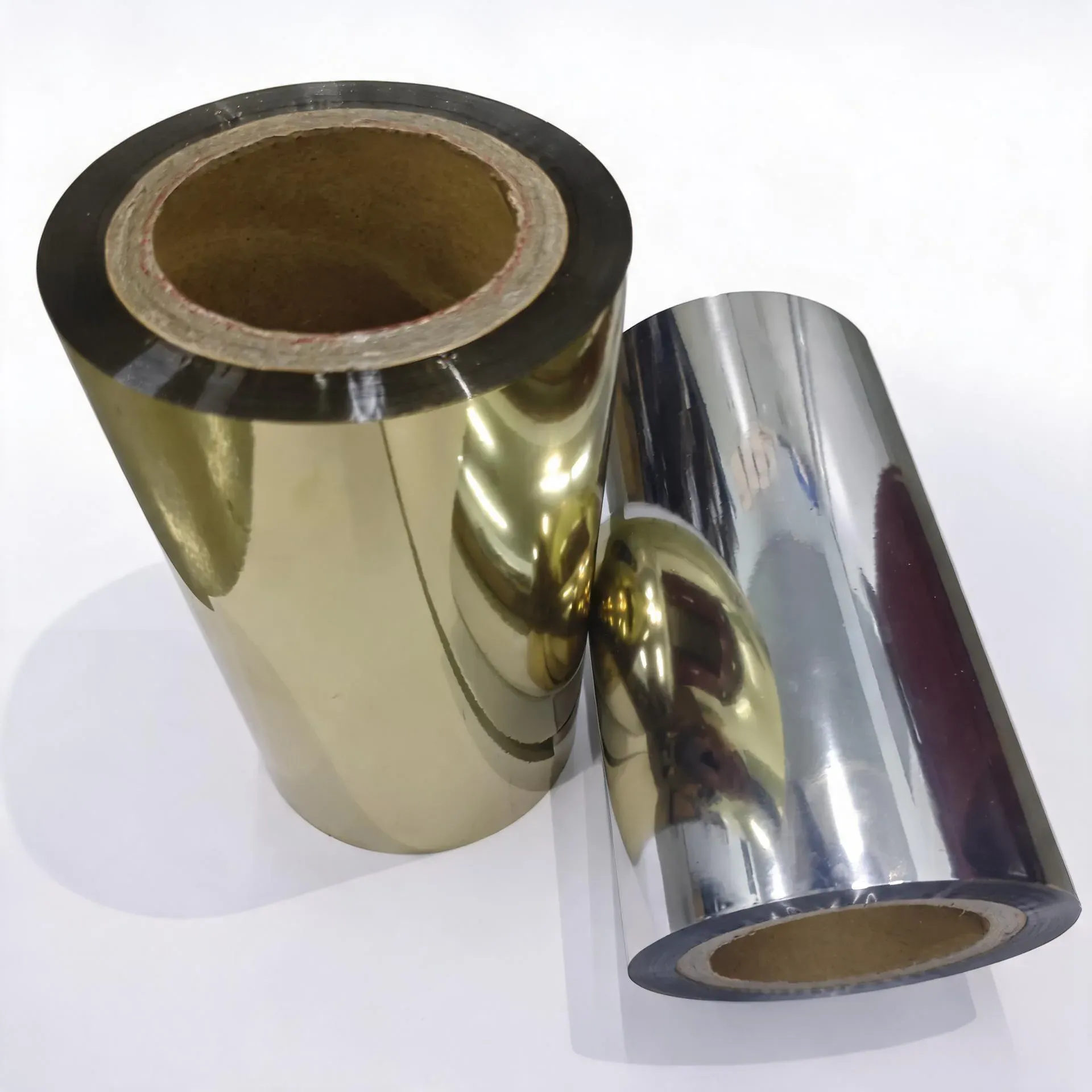
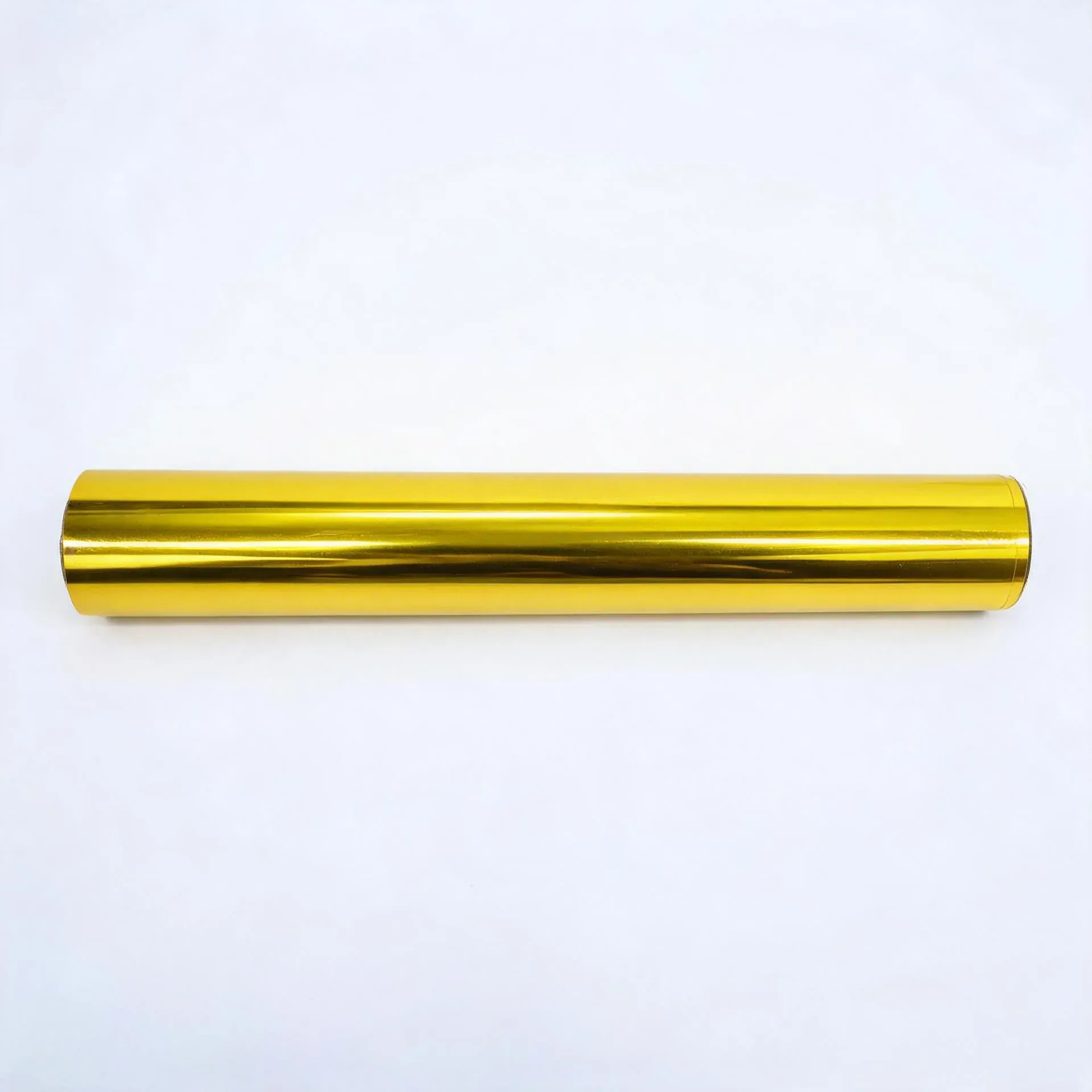
Matte gold, standard range. A gold tone with a satin rather than a mirror surface. Matte and bright are surface-finish choices that usually sit inside the same coating process, so the difference between matte and bright is usually smaller than the difference an added patterning stage makes.
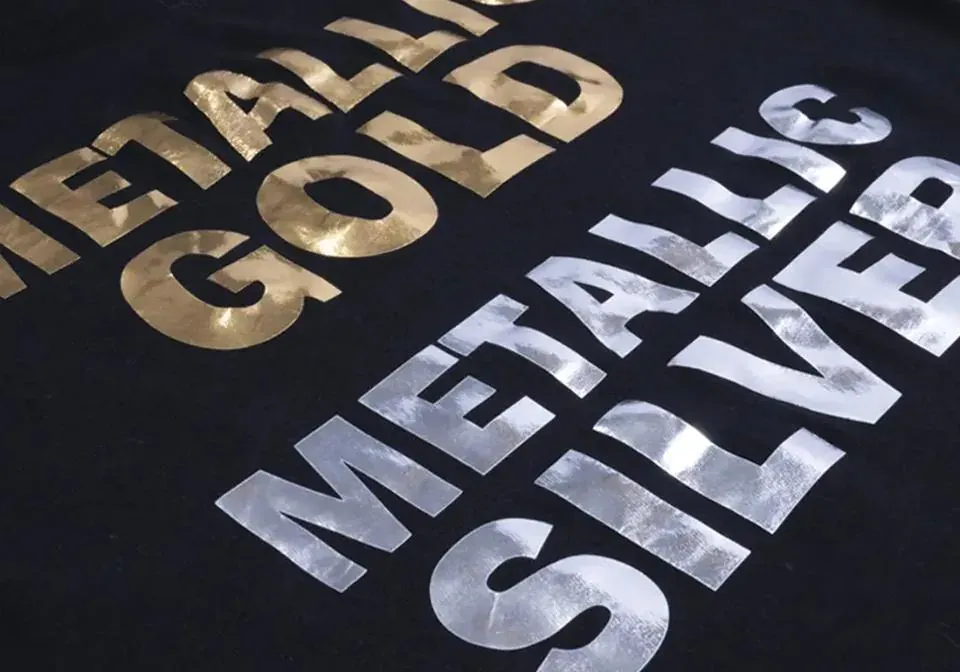
Matte silver. A satin silver tone you may be comparing against matte gold for the same job. Matte gold and matte silver are different tones rather than different processes, so what usually changes in a quote is which tone is specified and how many rolls of each you need - the stamping step is usually the same.
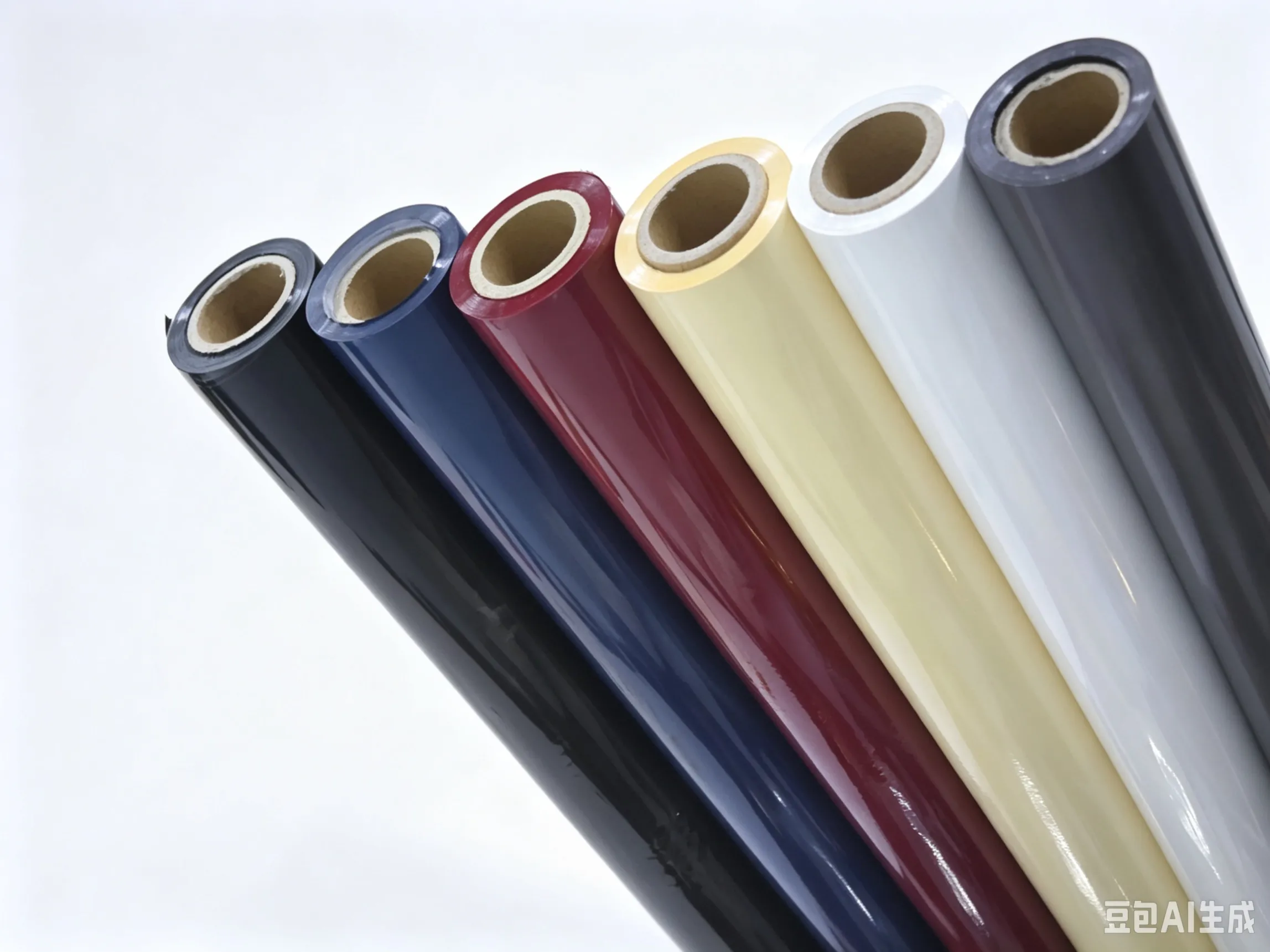
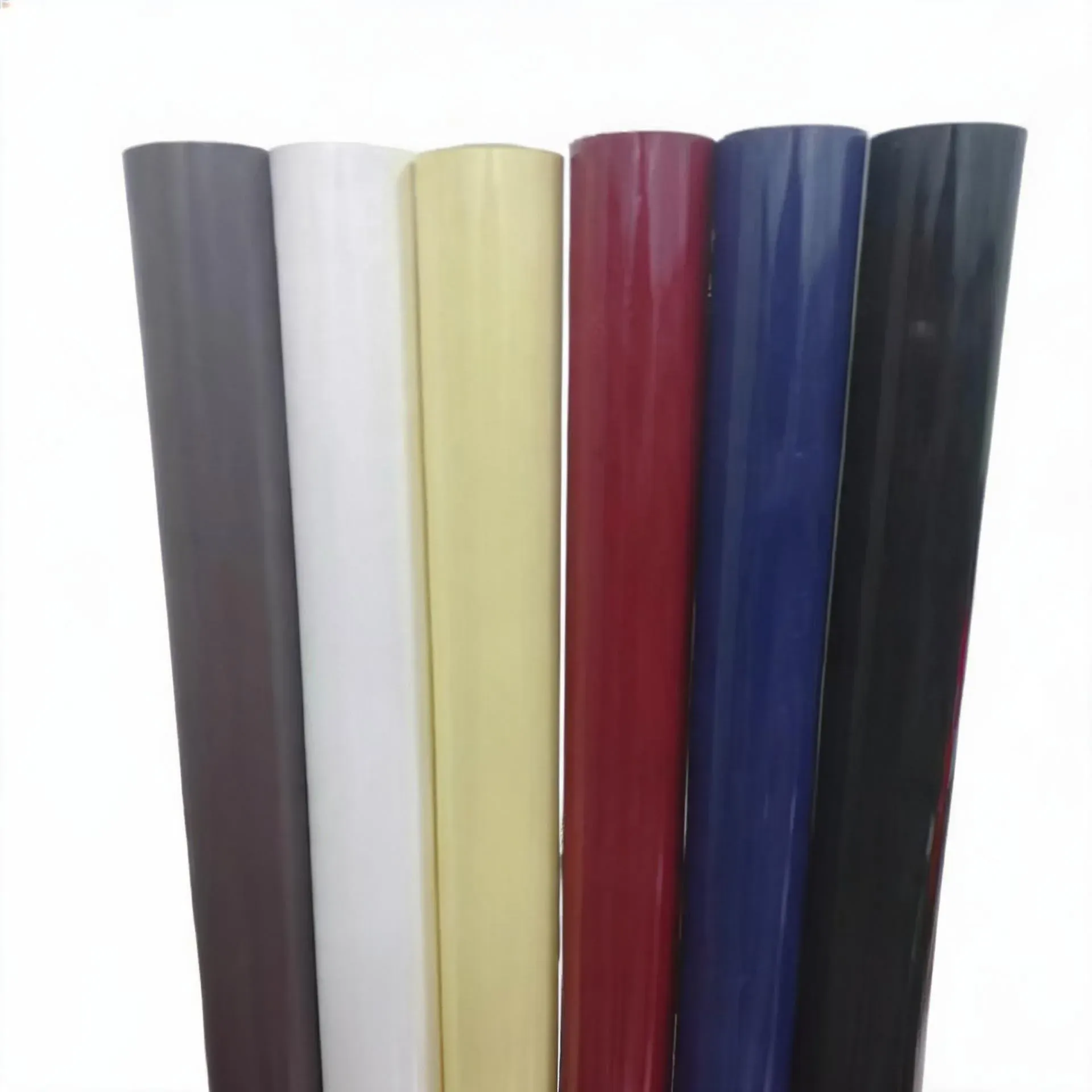
Dark colors. A dark or high-opacity tone usually needs more color-layer coverage to hide the metallized layer underneath than a light tone does. That coverage requirement is a cost driver that sits in coating, not in the stamping step.
Holographic. Holographic and seamless foils involve a patterning stage in addition to coating. The foil carries a micro-structured pattern that produces the shifting rainbow effect, and that step uses a separate machine from the coater. Our plant runs four holographic embossers alongside more than ten coating machines, which is consistent with that separate step.
Pearlescent grades sit outside these five: we supply them for premium cards and packaging paper, and they are a separate topic from the cost comparison below.
03 WHAT MOVES A QUOTE
Six things, and only the first is about the finish stage.
One: the finish and the stages it needs. Plain and matte usually stay inside coating; holographic adds a patterning step; a dark high-opacity tone usually adds coverage.
Two: roll width. Width changes the yield you get per meter, so it is a major variable in any quote. A 0.64 m roll and a 1.28 m roll are different products, and a custom slit is a different line item again.
Three: roll length. Our two standard roll sizes are 0.64 m x 120 m and 1.28 m x 240 m on 12 micron PET carrier film; other lengths are available. A longer roll means fewer changeovers for you and different packing for the supplier.
Four: color build. A stock tone from the supplier's range and a color matched to your artwork are not the same job, even when they look alike on a swatch.
Five: quantity. Setup, slitting and packing are spread across the run, so quantity changes each unit's share of those steps.
Six: what the foil has to survive - the substrate, the temperature window, and any printing or varnishing after stamping. A grade that must hold on a difficult surface is a different specification, and it should be quoted as one.
04 HOW TO COMPARE TWO QUOTES FAIRLY
Put the same six lines in front of every supplier and the comparison becomes arithmetic instead of opinion.
One: width, exactly - for example 0.64 m, and whether it is a stock width or a custom slit.
Two: length, exactly - for example 120 m, not "standard roll".
Three: film thickness - 12 micron is our standard carrier; if a quote specifies a different thickness, treat it as a different product.
Four: finish and color build - "gold" is not enough; specify the tone, bright or matte, and whether it is a stock tone or matched to your artwork.
Five: substrate approval - the board, plastic or leather it must run on, at a stated temperature window.
Six: quantity - per run and per order.
Two quotes for "gold foil" are not comparable until the width, length, film thickness, finish and color build, substrate and quantity are identical on both.
Agree two more things before the order, once the price is settled: how the shipment is split, and which test you will use to accept the batch. Neither belongs in the price comparison, and both are common sources of dispute afterwards.
05 NEXT STEP
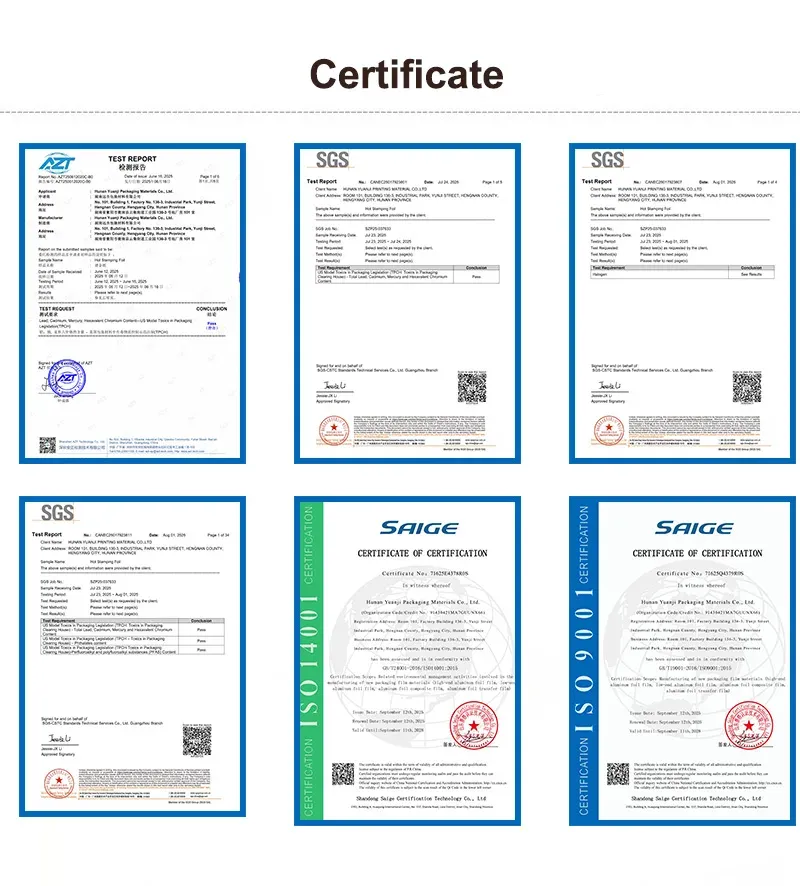
We quote against a specification rather than publishing a price list, because the specification changes the number. Send us the six lines - width, length, film thickness, finish and color build, substrate and quantity - and we will quote each finish you are considering on the same basis. Yuanji Foil is a hot stamping foil manufacturer in Hengyang, Hunan. Our 20,000 m2 plant runs a 1650 mm vacuum coating machine, more than 10 coating machines and 4 holographic embossers. We hold ISO 9001 and ISO 14001 management-system certificates and import and export rights, and we recommend a trial before bulk use.